
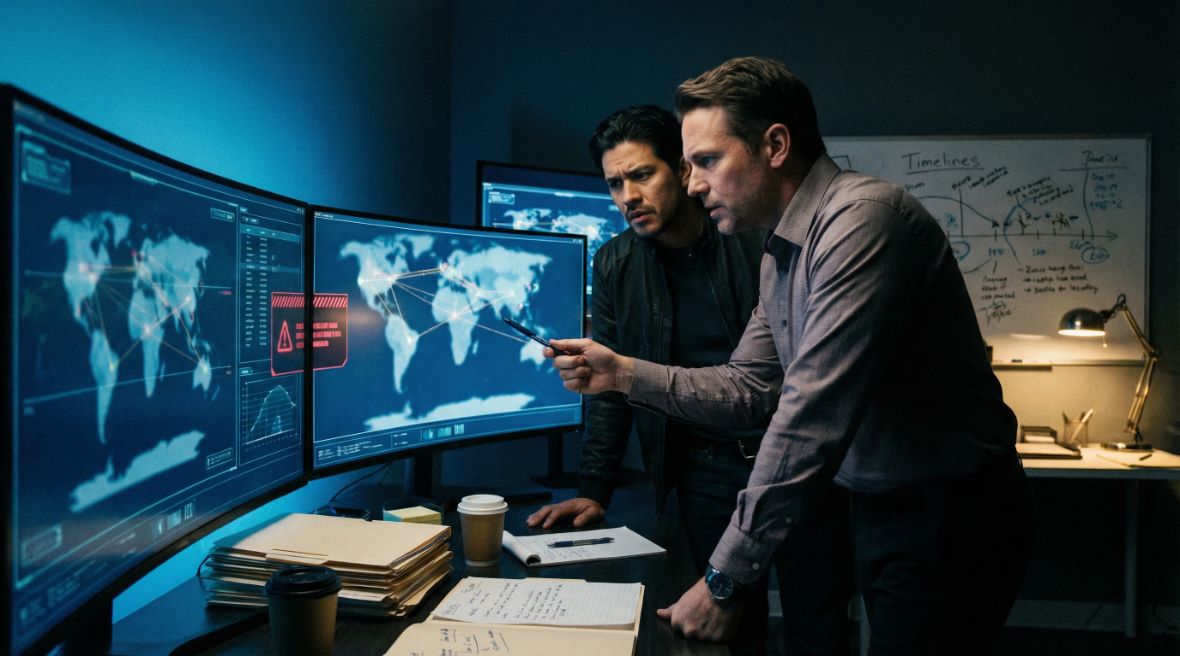
The world of private investigation changed forever in 2025. You might think of a detective as someone in a trench coat hiding in the shadows; however, the reality this year was much different. Investigations now occur through a combination of high-speed computer signals and traditional boots-on-the-ground methods.
This year brought a wave of new challenges that forced professionals to rethink how they find the truth. Whether you are looking to hire a professional or you are simply curious about how the industry works, the lessons from the past twelve months are eye-opening. You will see how technology is helpful, but also how it makes some parts of the job much harder. Every Lesson learned this year points toward a future where “truth” is more complicated to find but more valuable than ever.
How Artificial Intelligence Changed Investigations This Year
You cannot talk about private investigation in 2025 without mentioning artificial intelligence. In previous years, AI was a buzzword that didn’t do much for the average person. Now, private investigators use these tools every single day to sort through millions of data points in seconds. This change has made certain parts of the job lightning fast. If you need to find a needle in a haystack, AI is like a giant magnet that pulls it out for you.
Tools used by private investigators this year can now simultaneously scan public records, court filings, and news reports from across the globe. These programs don’t just find names; they find connections. They can show if two people lived in the same apartment building ten years ago or if they shared a business partner in a different country. This level of speed was impossible just two years ago. Back then, a human would have to spend weeks visiting libraries and courthouses to find those same links.
However, a big Lesson from 2025 is that technology is not perfect. While a computer can find data, it doesn’t always understand the context. It might see two people with the same name and assume they are the same person. If an investigator relies only on the computer, they will make big mistakes. You still need a human to look at the results and say, “This doesn’t make sense.” The most competent private investigators this year learned to treat AI like a fast assistant, not a boss.
The tech also helps with visual data. New software can scan hours of grainy security footage to find a specific car or a person wearing a red hat. Visual data saves clients a massive amount of time by eliminating the need to pay a human to watch 40 hours of parking lot video. Even with these tools, the human touch remains the most critical part of the process. A computer cannot look a witness in the eye and tell if they are lying. As the year progressed, it became clear that the best results come from a blend of high-tech tools and human intuition.
Moving Beyond Simple Database Searches
In the past, many people thought private investigation was just about having access to “secret” databases. You would pay someone to look up a phone number or a home address. By 2025, that business model mostly die out. Most people can find basic information on their own using search engines. Today, the real work is about understanding patterns.
A major Lesson for the industry this year was that speed does not equal accuracy. Just because you can get a report in five seconds doesn’t mean the report is right. Real-time data analysis now looks at “living” data. This includes things like active business licenses and current social media activity as it happens. The shift moved from gathering piles of paper to interpreting what that data actually means for a case.
The Big Lesson on Digital Privacy and Social Media
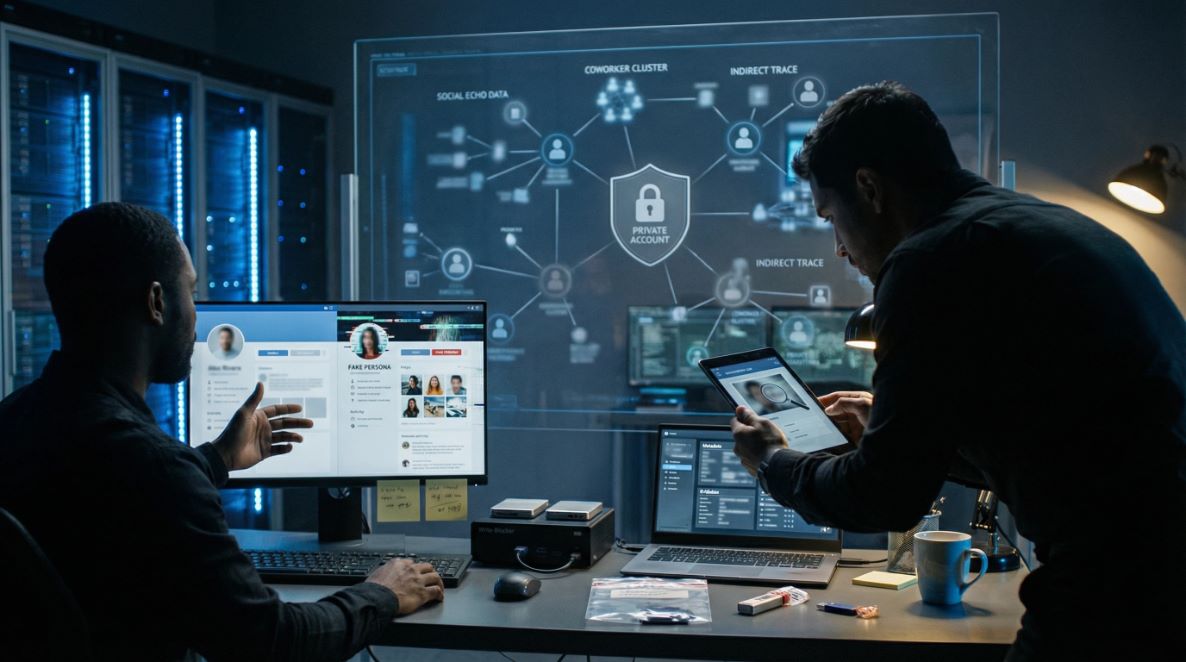
In 2025, there was a massive shift in how people think about their digital footprint. For years, people posted everything online without a second thought. Now, people are much more careful. They use encrypted apps, they hide their locations, and they set their profiles to private. This app has made covert private investigation much more challenging.
Because of new privacy laws, private investigators have to be more careful than ever. One wrong move can get a case thrown out of court or lead to a lawsuit. You might think you can just track someone’s phone, but the laws now protect that data very strictly. Many people also use tools to scrub their information from the “people search” websites that were once a gold mine for investigators.
This environment taught us a valuable Lesson: you have to be more creative. You can’t just wait for someone to post a “selfie” with a location tag. Now, investigators look for the “echo” of a person, which means looking at the people around the subject. Even if the person you are looking for is private, their cousin or their coworker might not be. Finding the target often requires finding the people they interact with first.
Another challenge is the sheer volume of online noise. There is so much information that it becomes hard to find what is relevant. People also create fake personas online to throw others off the trail. You might see a social media profile that looks real but is actually created by someone to hide someone’s actual location. This type of digital “smoke and mirrors” became very common in 2025. It requires a high level of skill to see through these traps and find the truth.
Why Old Surveillance Methods Often Fail Now
Tailing a car used to be the bread and butter of private investigators. In 2025, this became much harder because of “smart cities.” Cameras are everywhere, and many cars now have built-in sensors that can detect if they are being followed. If you sit in a car on a quiet street for too long, a smart doorbell might alert the homeowner or even the police.
The intense, “heart-rate-pounding” chases we often see are being replaced by digital tracking methods, but those techniques also have their limitations. Modern investigators frequently adopt a “hybrid” approach. For example, they might use drones for a quick aerial view of a property or rely on public traffic cameras to track a vehicle’s movements. This year has demonstrated that relying solely on traditional methods can lead to being caught. To remain unnoticed, it is essential to understand how a connected world operates.
| Method | Old Way (Pre-2025) | New Way (2025) |
| Locating a Person | Calling neighbours and old jobs | Analysing digital patterns and “echo” data |
| Surveillance | Sitting in a van for 12 hours | Using smart sensors and remote cameras |
| Background Checks | Checking local courthouse paper files | Using AI to scan global electronic records |
| Verification | Taking a document at face value | Checking for deepfakes and digital edits |
The Human Factor and Building Trust with Clients

One of the most surprising lessons from 2025 was about people, not machines. In the old days, a private detective could often be seen as a “lone wolf.” They were grumpy, mysterious, and didn’t talk much. That doesn’t work anymore. Today, the most successful private investigators are great communicators. They have to explain complex technology to their clients and build trust.
Ethics became the top priority this year. With so much power to find information, it is easy to cross a line. Clients want to know that the data was gathered legally. If an investigator breaks the law to get a photo, that photo is useless in a legal battle. This year taught us that being honest about what you can and cannot do is the best way to keep a business running.
Communication is also vital when the news is bad. Sometimes, an investigation doesn’t find what the client wants. The husband isn’t cheating, or the business partner is actually honest. A good investigator knows how to deliver this news gently. They act more like consultants than spies. This human connection is something a computer will never be able to replace.
Furthermore, 2025 showed us that teamwork is better than working alone. Many cases are now too big for one person. A modern private investigation might require a computer expert, a physical surveillance specialist, and a legal researcher. Managing these teams requires leadership skills that weren’t as necessary twenty years ago. The “lone wolf” era is over; the “expert network” era is here.
Verifying Information in a World of Deepfakes
The rise of deepfake technology was a huge hurdle this year. You can no longer trust a video just because you see it with your own eyes. People can use AI to make it appear as if someone was at a specific place when they were actually miles away. They can even fake someone’s voice on a phone call.
This led to a critical Lesson: double-check everything. Private investigators had to go back to “old-school” methods to verify digital evidence. This means finding physical receipts, talking to real witnesses, and checking physical logs. If a video shows a person at a bar, the investigator might go to that bar and talk to the bartender. They look for “analog” proof to back up the digital story. This return to the basics has saved many cases from being ruined by fake evidence.
Reality is now a mix of what we see on screens and what we see in person. A video is just a starting point. To prove something is true in 2025, you need many different types of evidence that all point to the same conclusion. If the digital data says one thing but the physical evidence says another, you know something is wrong. This year proved that witness interviews remain among the most powerful tools in existence.
The Future of Finding the Truth
As you look back on this year of investigation, one thing is clear: the job is getting more complex. The tools are getting better, but the target is getting smarter. Each Lesson we’ve discussed shows that you cannot rely on just one method. You need a complete toolbox of skills, from high-end AI to basic conversation skills.
The world won’t get any simpler in the coming years. Privacy will remain a battleground, and technology will continue to create new ways to hide or uncover facts. However, the core goal of all private investigators remains the same as it was a hundred years ago. The goal is to find the truth, no matter how deeply it is buried.
If you are thinking about the year ahead, remember that information is everywhere, but wisdom is rare. Finding a piece of data is easy; knowing what it means is the hard part. The industry is moving toward a world where the human mind is the most valuable tool in private investigation. Whether it is through a screen or on the street, the search for the truth continues.
As we move into 2026, keep an eye on how these lessons evolve. The balance between digital power and human ethics will define the next chapter of this profession. Stay curious, stay sceptical of what you see online, and always look for the evidence that stands up to the light of day. The hunt for the truth is a journey that never truly ends; it just gets more interesting every year. Trust and integrity will always be the most critical part of any case. Regardless of the gadgets used, the human heart remains the best judge of character.
Frequently asked questions
What specific AI tools are currently being used by private investigators?
Private investigators utilise AI tools for data aggregation, pattern recognition, and open-source intelligence analysis of public records, court documents, and news sources. Additionally, computer vision software is used to quickly review and filter large volumes of video footage.
How are private investigators adapting to the new privacy laws in their daily work?
Investigators mainly depend on legally obtained, publicly accessible data and meticulously document their sources to ensure compliance. There is a greater focus on legal training, transparency with clients, and indirect investigative techniques such as pattern and network analysis.
What methods are being employed to verify the accuracy of AI-generated data before it’s used in investigations?
AI-generated findings are considered preliminary leads and are reviewed by a human investigator. Results are verified by cross-checking independent sources, physical evidence, and in-person interviews to avoid errors or manipulation.


