
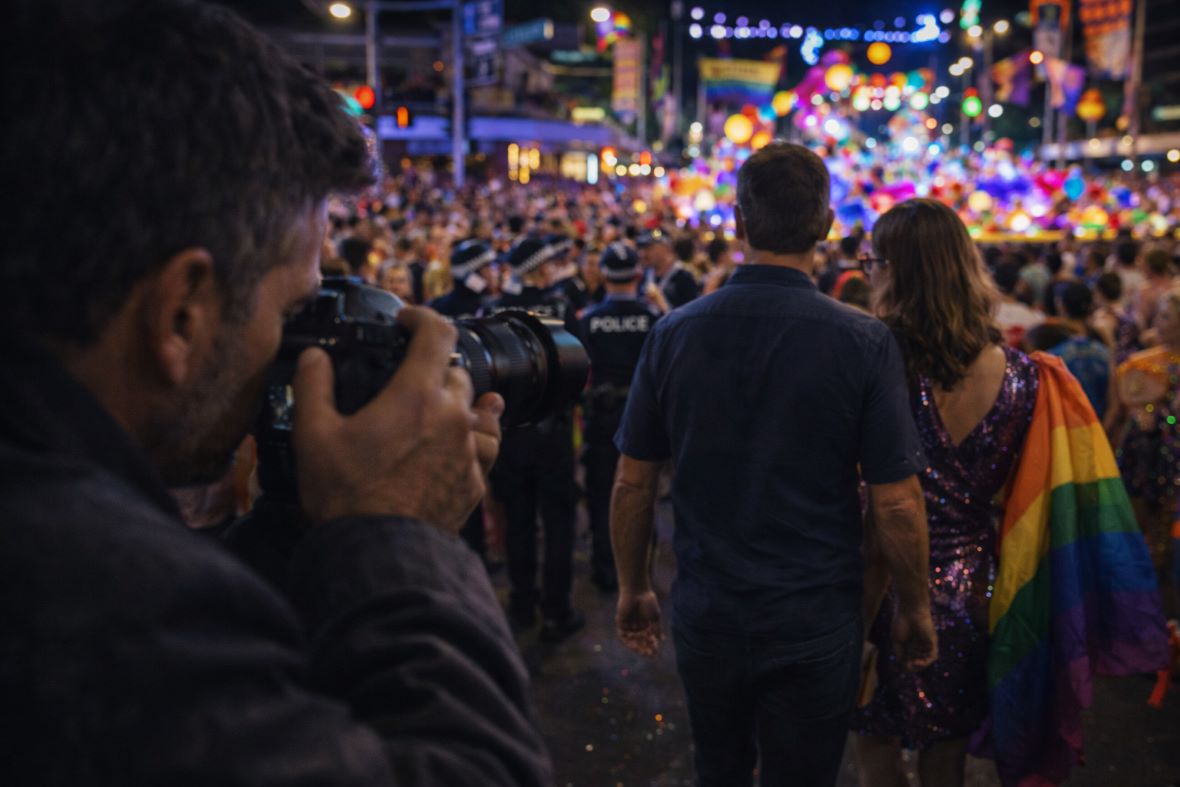
Sydney’s festival season brings big crowds, late nights, and more social freedom than a normal week. For most people, it is just fun. For some relationships, it is the period when “something feels off” becomes a real question.
A Sydney private investigator’s job is not to moralise. It is to verify facts. Still, there is a real pattern behind why cheating suspicions often spike around festivals and major festive periods. The correlation is mostly about opportunity, lowered inhibition, and a sudden surge in private digital contact.
This article is general information, not legal advice.
The correlation: festivals increase the ingredients that make secrecy easier
There is not one single “festival causes cheating” study, and it is important not to pretend there is. The more accurate claim is this:
Festivals and holiday periods increase the same risk factors that research links to sexual risk-taking and extra-dyadic behaviour, especially when alcohol is involved.
1) Alcohol and “risk behaviour” rise at festivals
Australian research on music festival attendees found risky substance use and sexual behaviour were common in that setting, with alcohol central to the event experience.
Similarly, Australian research on Schoolies week found substantial alcohol-related harm, including engagement in unprotected sex. The study also reported that each additional drink increased the likelihood of certain harms, and illicit drug use was strongly associated with unprotected sex with a non-partner.
That does not prove cheating. What it does support is that high-intoxication environments increase impulsive decisions and boundary crossings.
A broader WHO review also notes links between alcohol use and sexual risk behaviours in general populations and vulnerable groups.
2) Dating and messaging behaviour spikes around the holiday period
Another major factor is digital contact. Many “festival cheating” situations start with messaging first, then move offline later.
Dating apps themselves report predictable seasonal spikes, especially early January (often called “Dating Sunday”). Tinder’s official pressroom describes this early-year period as the busiest, with increased messaging activity.
Hinge also describes “Dating Sunday” as its busiest day each year, with increased activity and conversation-starting behaviour.
This matters because increased app activity creates more opportunities for reconnection with exes, new matches, and private chats that are easy to hide inside a “busy social calendar.”
3) Some people use dating apps while in relationships
Research on Tinder use in committed relationships has examined motives, including seeking casual sex and relationship alternatives. A widely cited paper notes that non-single users report different motives and more casual outcomes than single users, and it references an Australian finding that a portion of partnered users used Tinder to engage in a sexual affair.
Again, this does not mean your partner is cheating because they are out on a festival weekend. It does explain why suspicion often rises after these periods. There are simply more channels and more opportunities.
What this looks like in real Sydney cases (without jumping to conclusions)
When cheating occurs around festivities, it usually follows predictable patterns. Not romance. Logistics.
Common “opportunity windows”:
- After-work “pre-drinks” that roll into late-night after-parties
- Single-day events that turn into “staying at a mate’s place”
- Travel is tied to events, especially when accommodation is involved
- Multi-venue nights, where receipts and movements become hard to track
Common friction points that trigger disputes:
- Conflicting timelines (who they were with, when they left, when they got home)
- Phone behaviour changes (privacy, deletion, muted notifications)
- Money and transport anomalies (rideshare receipts, cash withdrawals, missing bank transactions)
- Social media inconsistencies (tagged elsewhere, photos posted later, friends seeing something different)
A private investigator does not treat any one of these as proof. The focus is on corroboration.
How to reality-check without spying or breaking the law
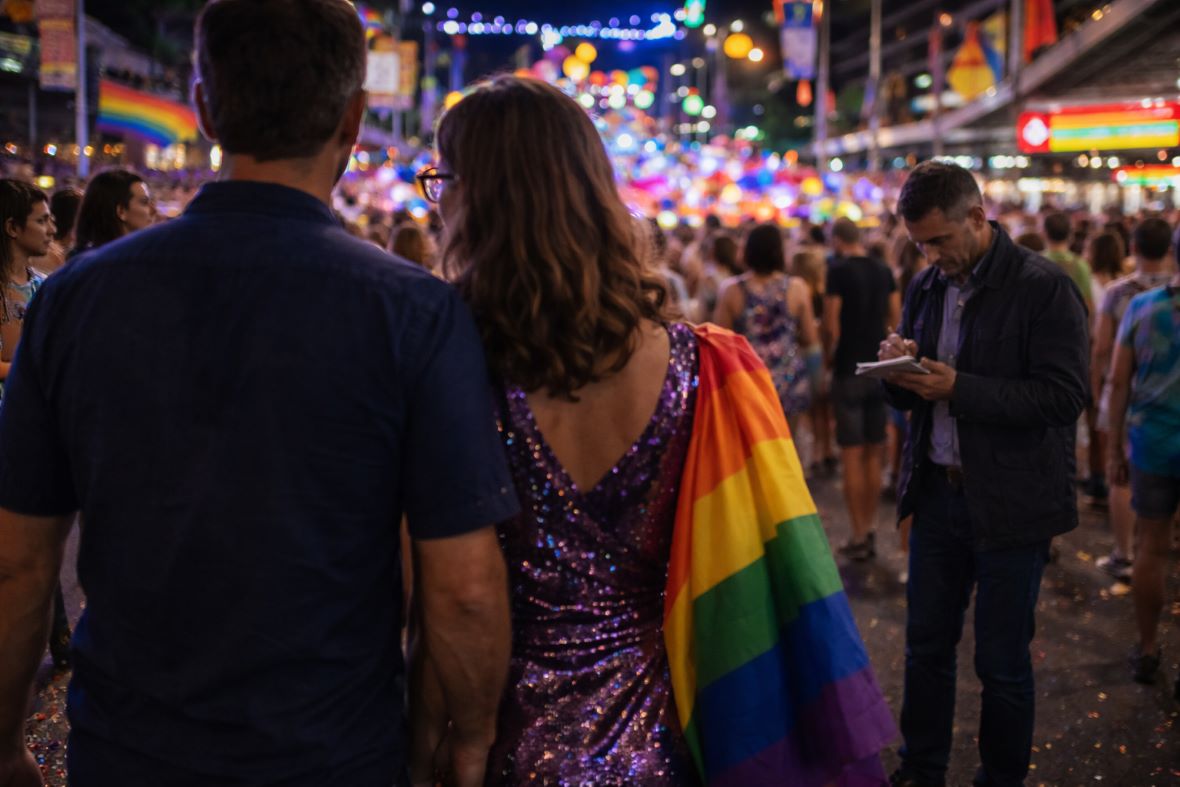
If you are worried after a festival weekend, the goal is clarity, not escalation.
A calmer approach that protects you
- Write down facts, not interpretations. Dates, times, what was said, what changed.
- Ask one clear question at a calm time. “Can you walk me through the night from start to finish?”
- Look for consistency, not perfection. People forget details. Patterns of changing stories matter more than one fuzzy moment.
- Avoid illegal recording or tracking. In NSW, recording private conversations can trigger serious offences under surveillance device laws.
If you need evidence for legal decisions, do not DIY your way into a legal problem.
When a Private Investigator in Sydney can help, and what they actually do
In NSW, private investigators in Sydney doing investigation and surveillance work must be properly licensed (Class 2E).
When engaged lawfully, a PI can help by:
- Building a timeline based on lawful observations and client-provided material
- Conducting surveillance from lawful public vantage points (no trespass, no harassment)
- Corroborating routines and meeting patterns over multiple days when needed
- Producing court-friendly documentation (clear notes, time stamps, original files where possible)
The key value is not “catching someone.” It is preventing the endless loop of “that is not what happened.”
A practical conclusion for readers
Festival season increases opportunity, alcohol exposure, and digital contact. Those factors are strongly linked to sexual risk behaviours and can make secrecy easier, which is why suspicion often rises after big nights out.
Still, patterns are clues, not proof. If your gut says something changed, stay calm, document what you know, and choose lawful steps. If the stakes are high (custody, finances, safety, or a legal dispute), professional verification can be the fastest way back to clarity.
FAQs
Does festival season really increase cheating?
It increases opportunity, intoxication, and private digital contact, which are correlated with sexual risk behaviours and boundary slips. It does not prove cheating in any individual case.
Are dating apps more active around holidays?
Yes. Apps report early-year spikes such as “Dating Sunday,” with increased messaging and engagement.
Should I record conversations to protect myself?
Be careful. NSW surveillance device laws can make recording private conversations unlawful in many situations, and that can backfire. Get legal guidance first if you are considering this.
What can a licensed Sydney PI confirm?
A PI can confirm timelines and observable behaviour using lawful methods and document findings clearly. They are not allowed to hack accounts, impersonate others, or engage in unlawful surveillance.
References:
Jenkinson, R., Bowring, A., Dietze, P., Hellard, M., & Lim, M. S. C. (2014). Young risk takers: Alcohol, illicit drugs, and sexual practices among a sample of music festival attendees. Journal of Sexually Transmitted Diseases, 2014, Article 357239. https://doi.org/10.1155/2014/357239 Retrieved March 2, 2026, from https://pmc.ncbi.nlm.nih.gov/articles/PMC4437411/
Lubman, D. I., Droste, N., Pennay, A., Hyder, S., & Miller, P. (2014). High rates of alcohol consumption and related harm at schoolies week: A portal study. Australian and New Zealand Journal of Public Health, 38(6), 536–541. https://doi.org/10.1111/1753-6405.12266 Retrieved March 2, 2026, from https://www.sciencedirect.com/science/article/pii/S1326020023022136
Timmermans, E., De Caluwé, E., & Alexopoulos, C. (2018). Why are you cheating on Tinder? Exploring users’ motives and (dark) personality traits. Computers in Human Behavior, 89, 129–139. https://doi.org/10.1016/j.chb.2018.07.040 Retrieved March 2, 2026, from https://www.sciencedirect.com/science/article/pii/S0747563218303625
World Health Organization. (2012, June 16). Alcohol use and sexual risk behaviour: A cross-cultural study in eight countries. Retrieved March 2, 2026, from https://www.who.int/publications/i/item/alcohol-use-and-sexual-risk-behaviour-a-cross-cultural-study-in-eight-countries
Tinder. (2026, January 1). Tinder Dating Sunday Data: 10M more DMs sent during Peak Season. Tinder Newsroom. Retrieved March 2, 2026, from https://au.tinderpressroom.com/Tinder-Dating-Sunday-Data-1-1-26
Hinge. (2025, December 17). What daters need to know ahead of Dating Sunday 2026. Hinge Newsroom. Retrieved March 2, 2026, from https://hinge.co/newsroom/dating-sunday-2026
New South Wales Government. (2007). Surveillance Devices Act 2007 (NSW). NSW Legislation. Retrieved March 2, 2026, from https://legislation.nsw.gov.au/view/whole/html/inforce/current/act-2007-064
AustLII. (n.d.). Surveillance Devices Act 2007 (NSW) s 7 (Prohibition on use of listening devices to overhear, record, monitor or listen to private conversations). Retrieved March 2, 2026, from https://www.austlii.edu.au/cgi-bin/viewdoc/au/legis/nsw/consol_act/sda2007210/s7.html
New South Wales Police Force. (n.d.). Class 2 licences (Security Licensing & Enforcement Directorate). Retrieved March 2, 2026, from https://www.police.nsw.gov.au/online_services/sled/security_licences/class_2_licences


