
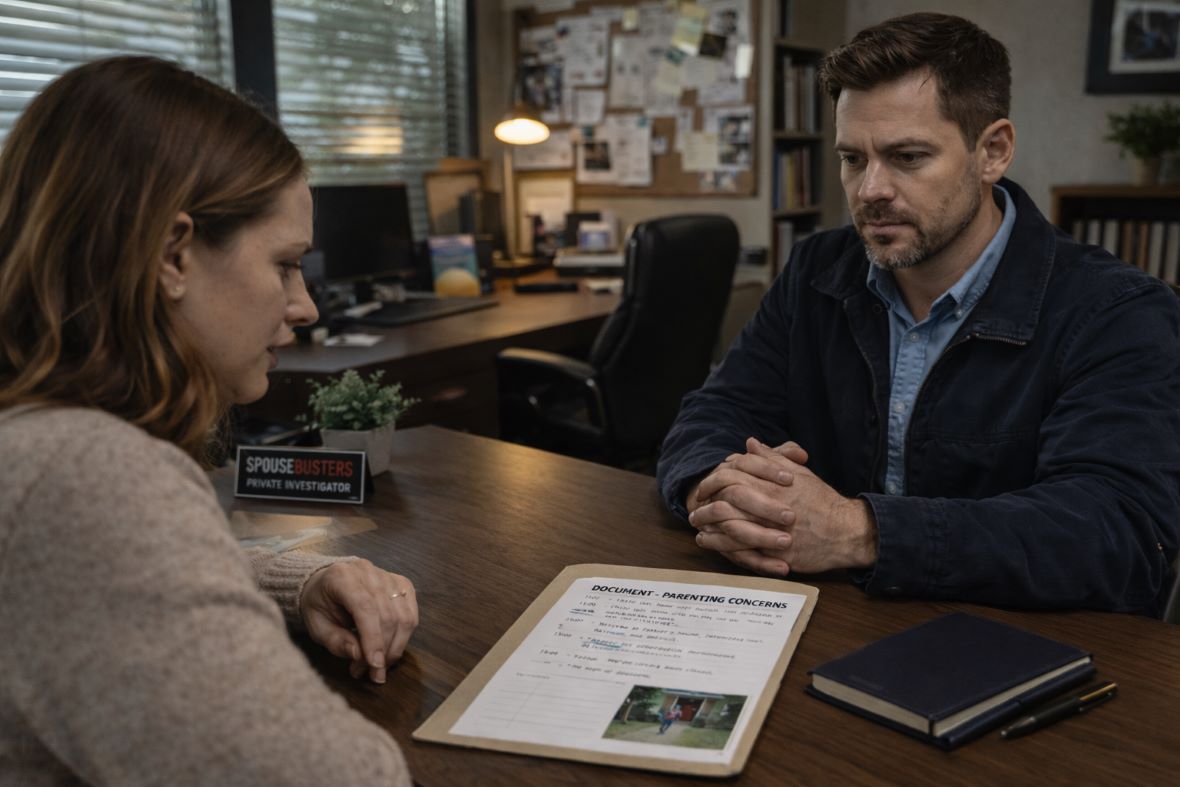
Documenting parenting concerns effectively can significantly bolster your case in a child custody battle. When parents meticulously record incidents and behaviours, they create a clear and objective timeline of events. This careful documentation helps to present a well-founded narrative, demonstrating any patterns that may affect the child’s well-being.
Additionally, addressing concerns promptly rather than waiting too long can prevent misunderstandings and miscommunications. By confronting issues with documented evidence, parents can avoid relying on memory when the stakes are high. This proactive approach often enhances credibility and can sway custody decisions in their favour, as it shows commitment to the child’s best interests. Ultimately, thorough documentation can be a decisive factor in winning custody battles.
When parenting concerns start building after separation, many people make one of two mistakes. The more effective approach is to stay calm and clearly document the facts. If your concerns involve supervision, routines, safety, intoxication, missed handovers, or behaviour that affects your child’s well-being, the goal is not to “build a case” based on emotions. Instead, focus on creating a reliable record of what is actually happening. In Australian family law, the best interests of the child are the primary consideration, which makes factual, child-focused documentation far more valuable than accusations or personal opinions (Federal Circuit and Family Court of Australia).
Why documentation matters
Good documentation helps you:
- spot whether the issue is a real pattern or a one-off event
- reduce emotionally charged arguments
- explain your concerns more clearly to a lawyer, mediator, counsellor, or the Court
- stay focused on the child’s well-being rather than the conflict between adults
Poor documentation usually looks like:
- long emotional messages
- arguments by text
- vague claims without dates or specifics
- assumptions about motive
- trying to provoke an admission instead of recording what happened
What you should document
Focus on observable facts, not conclusions.
Useful details include:
- the date and time
- the handover location
- who was present
- what was said, if relevant
- the child’s condition when leaving or returning
- missed pickups or late arrivals
- visible intoxication, unsafe behaviour, or supervision issues
- repeated routine problems, such as no meals, missed schoolwork, or poor sleep
Examples of factual notes:
- “Returned at 8:35 pm instead of 6:00 pm. No notice given.”
- “Child said they had not eaten dinner yet.”
- “Strong smell of alcohol at handover.”
- “Child arrived without school bag for second time this month.”
Less useful notes:
- “He is a terrible parent.”
- “She clearly does not care.”
- “He is always lying.”
- “She is trying to upset me.”
The difference is simple: one records what happened, the other argues about what it means.
Keep the focus on the child
This is one of the most important parts. Documentation should stay centred on:
- the child’s safety
- the child’s routine
- the child’s emotional state
- the child’s practical needs
It should not become a running diary of every grievance about the other parent.
The Family Relationships guidance for separated families consistently encourages parents to focus on children’s needs and reduce conflict where possible. That does not mean ignoring real concerns. It means documenting them in a way that is relevant, proportionate, and child-focused (Family Relationships Online).
Use one system and stick to it
A scattered record is harder to rely on later. Use one consistent method, such as:
- a notes app
- a dated document
- a parenting journal
- a spreadsheet with dates and incidents
Keep it simple and repeatable.
A useful structure is:
- Date
- What happened
- Why it mattered
- Any supporting material
For example:
- 12 March, 6:45 pm
Returned 45 minutes late to school-night handover. No update provided. Child appeared tired and had no school uniform packed for the next day.
Supporting material: screenshot of text sent at 6:10 pm asking for ETA.
Save supporting material carefully
Supporting material may include:
- screenshots of relevant texts or emails
- calendar records
- school attendance notes
- medical or counselling appointments
- photos of relevant practical issues, where appropriate
- copies of messages about missed handovers or changes
What matters is relevance. Save material that helps explain:
- timing
- consistency
- impact on the child
- attempts to resolve the issue calmly
Do not over-collect random material unrelated to the parenting concern.
Avoid turning documentation into conflict
Documentation should not become a weapon. To keep things from escalating:
- do not announce that you are “building evidence”
- do not send long emotional summaries to the other parent
- do not argue point-by-point in text messages
- do not bait the other parent into saying something damaging
- do not coach the child to repeat things
If communication is necessary, keep it brief and practical:
- confirm times
- ask direct questions
- request important information
- avoid loaded or sarcastic language
The Attorney-General’s parenting guidance and family law resources both emphasise that parenting decisions and arrangements should prioritise the child’s interests, not adult conflict (Attorney-General’s Department; Federal Circuit and Family Court of Australia).
Know when documentation is no longer enough
Sometimes documentation is the right first step. Sometimes the issue becomes serious enough that you need outside help.
You may need legal advice, mediation support, police, or urgent intervention if:
- the child appears unsafe
- there are threats, family violence, or coercive control
- intoxication or neglect is recurring
- the child reports serious harm
- you believe there is an immediate welfare risk
The Court’s parenting resources make clear that safety and the best interests of the child are central. If the concern has moved beyond disagreement and into risk, do not rely on note-taking alone (Federal Circuit and Family Court of Australia).
Conclusion
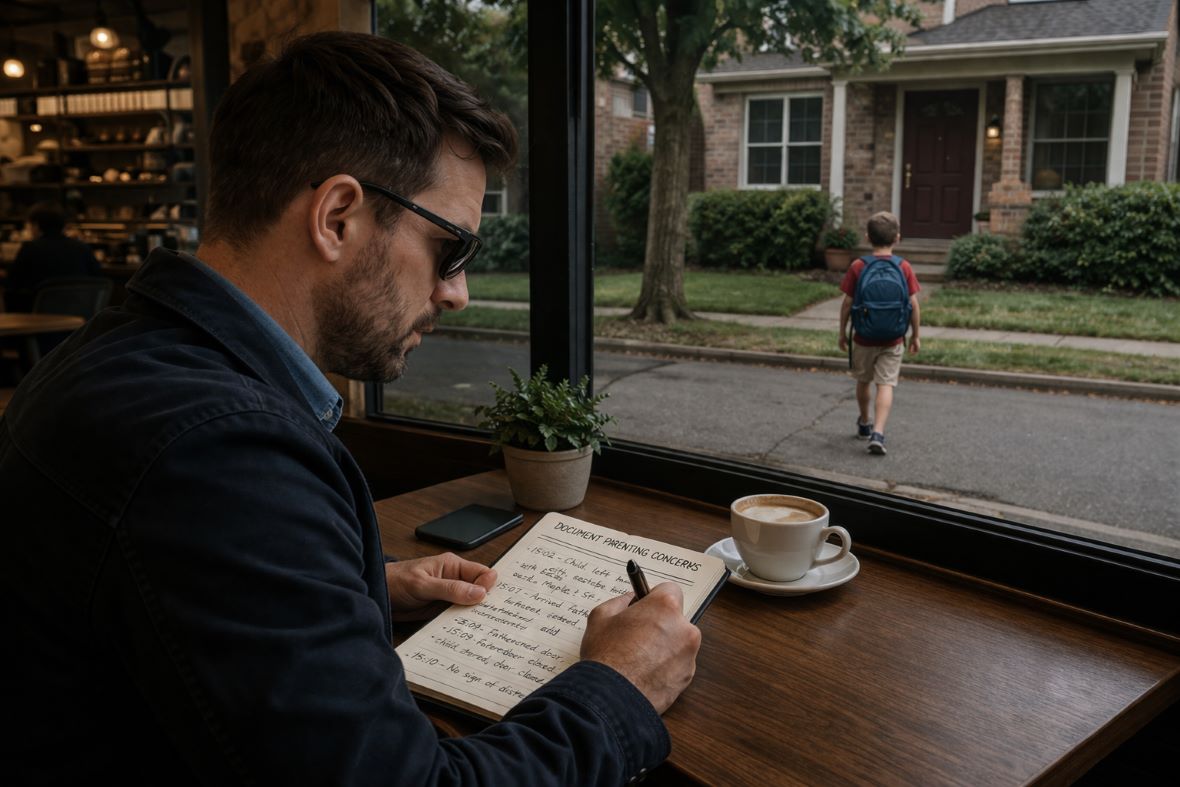
When navigating child custody battles, it’s essential to maintain a calm and focused approach to documentation. Keeping detailed records of interactions, schedules, and relevant communications can be a valuable resource during disputes.
Always aim to prioritise the child’s well-being and stability over personal grievances. This kind of documentation supports informed decision-making and demonstrates your commitment to the child’s best interests, making it easier to find common ground and resolve conflicts amicably.
Remember, the aim is to foster a cooperative environment that ultimately benefits the child, ensuring that any actions taken are based on objective facts and the child’s needs rather than heightened emotions.
FAQ
What is the most important thing to document in a parenting concern?
The most important things are dates, times, what actually happened, and how it affected the child. Keep your notes factual and focused on observable behaviour.
Should I tell the other parent I am documenting everything?
Usually not in a confrontational way. It is better to keep your own clear record and communicate only what is necessary in a calm, practical manner.
When should I get outside help instead of just documenting?
If the issue involves safety, repeated neglect, intoxication, threats, family violence, or serious distress for the child, it may be time to seek legal advice, police help, or urgent professional support.
References
Attorney-General’s Department. (2024, September 12). Parenting plans fact sheet. https://www.ag.gov.au/families-and-marriage/publications/parenting-plans-fact-sheet
Federal Circuit and Family Court of Australia. (n.d.). Applying to the Court for orders – family law. https://www.fcfcoa.gov.au/fl/pubs/applying-orders
Federal Circuit and Family Court of Australia. (n.d.). Before you file – pre-action procedure for parenting cases. https://www.fcfcoa.gov.au/fl/pubs/pre-action-parenting
Family Relationships Online. (2024, August 23). Children’s safety. https://www.familyrelationships.gov.au/parenting/childrens-safety
Family Relationships Online. (2026, February 13). Children and family law. https://www.familyrelationships.gov.au/parenting/children-family-law


