
As misinformation grows more sophisticated toward the end of 2025, the line between fact and fiction is blurrier than ever. While automated systems and synthetic media have flooded your feeds, private investigators have stepped in as the essential guardians of reality. These professionals have spent the year proving that human intuition and old-fashioned boots-on-the-ground work are the only ways to confirm what’s real.
Even as software claims to detect lies, the person behind the lens or the desk remains the one who finds the smoking gun. You’ve likely seen the headlines about high-profile cases cracked not by a computer but by a person who knew which questions to ask. This year has shown that the search for Truth is far from automated. It requires a blend of technological skill and a deep understanding of human psychology. Private detectives are no longer just people in trench coats; they’re the analysts you turn to when the internet lies to you. By combining digital mastery with physical evidence, they provide a level of certainty that no algorithm can match. In 2025, you rely on these experts to separate noise from fact.
The Changing Face of Private Investigators in 2025

The world of private investigation has undergone a massive shift this year (2025). You no longer see investigators just sitting in parked cars with long-lens cameras. Instead, you’ll find them navigating complex digital networks and managing large amounts of data. Their work now starts with your digital footprint, long before they ever step outside. They look at your social media, your public records, and even the traces you leave in buried corners of the web. This shift happened because your life is now mostly lived through a screen, making the digital trail as crucial as the physical one.
People still trust human private investigators because machines lack judgment. A software program can tell you that a person was at a specific location, but it can’t tell you why they were there. It can’t feel the tension in a room or notice if a witness is acting nervous because they’re hiding something. You hire an investigator because you need a person to interpret the data for you. This year, the industry has focused on this human balance. It’s about using high-tech tools to gather facts, then using human experience to find the meaning behind those facts.
The modern investigator also manages your privacy in an age where everything is public. They don’t just find secrets; they help you understand how your own information is exposed. In 2025, the job involves protecting clients from digital threats as much as it requires surveillance. You’re seeing more cases related to identity theft, online stalking, and corporate data leaks. These professionals have become the bridge between the physical world and the complex online world. They ensure that when you’re seeking the Truth, you see the whole picture.
How Private Investigators Spot Fake Information

In 2025, one of the biggest lessons learned is that you can’t trust what you see or hear on a screen without verification. This is where private investigators have become true experts. They spend their days debunking AI-generated photos, videos, and audio clips that look perfectly real. In the past, an investigator might spend hours checking the ink on a physical document or the watermark on a bank statement. Today, they look at metadata and the origin of a digital file.
To find the Truth, these experts use a process called digital forensics. They check if a person’s shadow in a photo matches the position of the sun at that exact time. They look for tiny glitches in the video that suggest a computer made it. This work is a lot like the paper trail investigations of the 1990s, but it moves much faster. You’ve probably realised that “seeing is believing” is no longer a safe rule to follow. Because of this, investigators have become the ultimate fact-checkers for your personal and professional life.
| Task Category | Past Method (Physical) | 2025 Strategy (Hybrid) |
| Document Check | Examining paper forgeries | Verifying blockchain and metadata |
| Location Tracking | Following a car for hours | Monitoring GPS and cell pings |
| Identity Verification | Checking a physical ID card | Deepfake and biometrics analysis |
| Witness Interviews | In-person meetings only | Encrypted calls and digital audits |
New Lessons from Recent Case Studies
Case studies from this year show that context is now the most essential part of any search for the truth. You might have all the data in the world, but without understanding the “why” behind it, the information has little value. For example, a GPS log might show a person at a hotel, but it cannot explain whether they were attending a legitimate meeting or hiding misconduct. Private investigators have learned that every digital finding must be tested against real-world evidence. In many recent matters, cases were resolved only after digital trails were traced back to individuals who could confirm events through direct testimony.
This approach closely mirrors the findings outlined in recent investigation reports published by the National Anti-Corruption Commission (NACC), which highlight how evidence can be misleading when examined in isolation. Those reports demonstrate that timelines, digital records, and communications often appear suspicious on their own, but only gain meaning when examined alongside intent, behaviour, and corroborating witness accounts. Investigations that relied solely on data without contextual verification frequently reached incomplete or incorrect conclusions, reinforcing the need for layered evidence assessment rather than surface-level analysis (National Anti-Corruption Commission, Investigation Reports and Case Studies).
The blend of groundwork and online searching has therefore become standard practice in modern investigations. If you are trying to locate a missing person, reviewing their social media activity is only a starting point. Investigators must then speak with the people they interacted with offline to confirm movements, relationships, and decision-making. Across both private investigation work and public corruption inquiries, the lesson is consistent: technology often reveals the “what,” but people explain the “how” and the “why.”
Modern investigators have also used these case studies to refine their ethical boundaries. With unprecedented access to information, professionals must constantly decide what is relevant and what is merely noise. Recent investigations show how easily excessive data can distract from the core facts. By prioritising quality over volume, investigators avoid overwhelming clients with irrelevant material and instead present clear, verifiable findings that withstand legal and ethical scrutiny. The takeaway for 2025 is clear: data is a tool, not a conclusion, and effective investigations depend on disciplined judgment as much as technical capability.
Old Methods Versus Modern Strategies
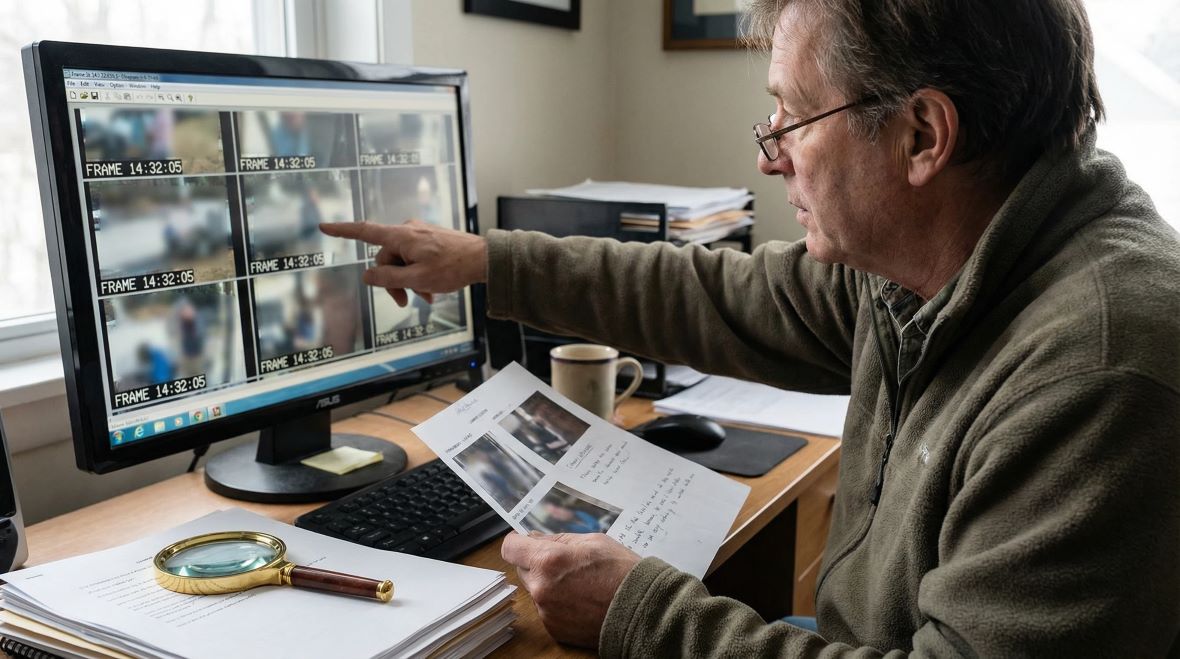
The way private investigators work today would look like science fiction to someone from twenty years ago. You might remember the old days of cold calling or sitting in a car for twelve hours straight. While stakeouts still happen, they look very different now. Investigators use drones to gain a bird’s-eye view of a property without ever stepping onto it, apply ethical OSINT (Open Source Intelligence) to analyse publicly available web data, and rely on advanced image tracing techniques to verify photos, identify digital origins, and uncover hidden connections that traditional surveillance would miss.
These changes make searching for the truth far more efficient. You no longer have to wait weeks for a simple update; modern tools often allow investigators to provide clear answers within days. That said, the old methods haven’t disappeared. A phone call can still be more revealing than an email, and a face-to-face conversation often uncovers details no text message ever will. The 2025 approach combines speed with reliability—using the fastest digital tools first, then reinforcing findings with proven human investigative methods.
| Tool / Strategy | Primary Use Case | Primary Benefit |
| Drones | Rural or large property views | Discretion and better angles |
| OSINT | Background and asset checks | Speed and massive data reach |
| Metadata Audit | Verifying photo/video dates | Detecting fake or old media |
| Human Intelligence | Interviewing key witnesses | Getting the emotional context |
Why Private InvestigatorsInvestigators Save Time and Money
Because the internet is free, you can be your own detective. The reality is that the internet is a maze designed to keep you clicking. Private investigators save you money because they know exactly where to look. They have access to databases that aren’t available to the general public. These databases contain accurate records on property, criminal history, and professional licensing that a standard search engine won’t show you. By hiring a pro, you avoid the trap of chasing dead ends or following false leads.
A professional also knows how to find hidden or deleted items. Just because someone deleted a post doesn’t mean it’s gone. Private investigators use tools to recover digital history that you wouldn’t know existed. They also understand the legal side of things. If you gather evidence the wrong way, you might not be able to use it in court. An expert knows how to stay within the law, so your evidence is actually helpful. This legal knowledge helps you avoid trouble or lawsuits of your own.
When you look at the cost of hiring an expert, think about the cost of being wrong. Being wrong about a business partner or a legal dispute can cost you much more than an investigator’s fee. In 2025, the lesson is that professional oversight is an investment in your peace of mind. You aren’t just paying for information; you’re paying for the certainty that it’s correct. This keeps your legal standing safe and your wallet protected.
Private Investigators Shaping the Search for Truth in 2025

The year 2025 has proven that the search for Truth is a profoundly human effort. Tools and software might make the job faster, but they can’t replace the sharp mind of a professional. Private investigators have shaped this year by acting as the final word on what’s real in an increasingly fake world. They’ve blended digital forensics with traditional detective work to give you answers you can trust. Whether it’s verifying an identity or finding a missing asset, their skills remain the gold standard for clarity.
Finding the Truth isn’t just about collecting data; it’s about understanding what that data means. As you move forward, remember that technology is only as good as the person who uses it. If you find yourself in a situation where the facts are unclear, don’t rely only on your screen. Reach out to a professional who can dig deeper and see the reality beneath the surface. When the stakes are high, having an expert on your side is the only way to be sure. You deserve to know the facts, and private investigators are here to make sure you find them.


