
Most people do not think about surveillance in dramatic terms. It usually begins with something smaller: an ex who seems to know too much, a car app that still feels connected, a strange location alert, or a phone that behaves differently after a separation. On their own, these moments can feel easy to dismiss, but together, they can signal a troubling pattern.
In Australia, government and research sources now recognise that technology-facilitated abuse can include tracking, monitoring, misuse of shared accounts, and control of connected devices. Concerns about smart cars, shared apps, and hidden trackers are not fringe worries; in fact, they can be serious warning signs that privacy, safety, and control are being compromised.
Why these signs matter more now
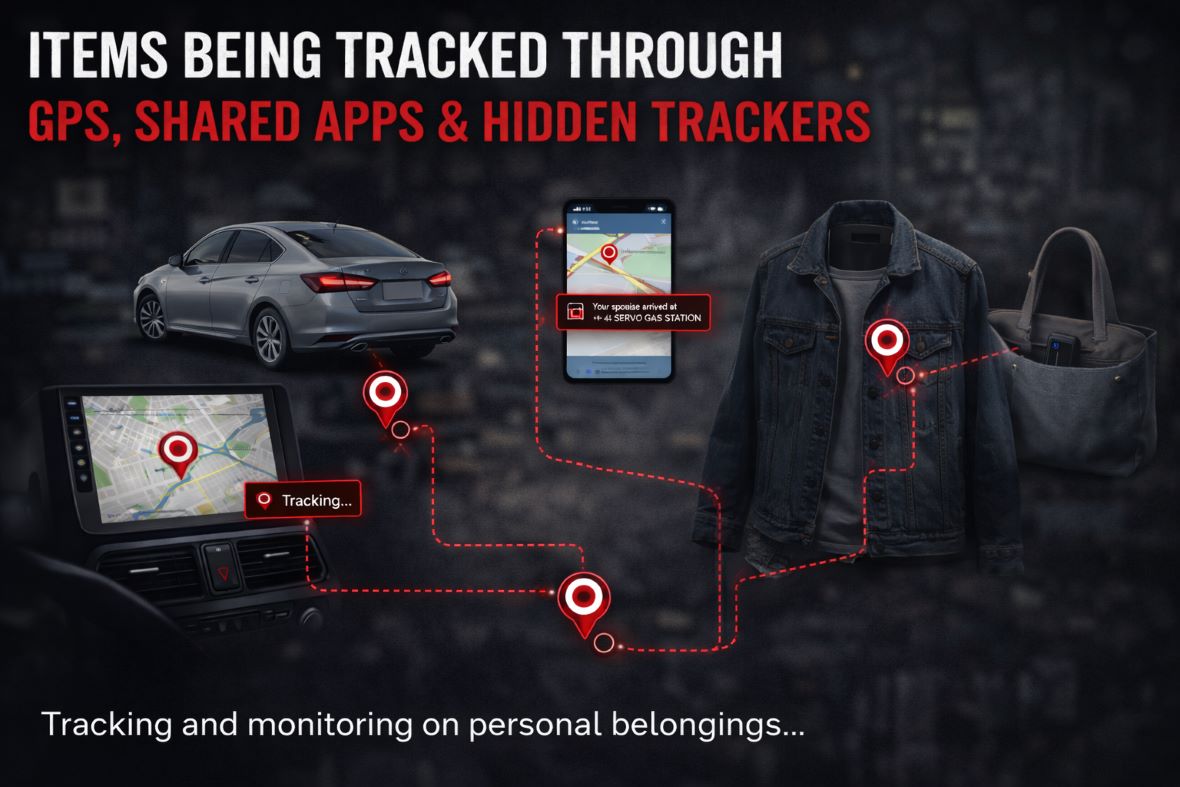
Modern devices are designed to remain connected all the time. While this convenience can be problematic when a relationship ends, the digital links often do not. Today, monitoring can occur through:
Today, monitoring can happen through:
- connected cars
- phone location sharing
- smart-home devices
- Bluetooth trackers
- shared cloud accounts
- linked family apps
- wearables and other connected devices
eSafety highlights that the same patterns keep emerging across smart devices: location trails, remote commands, shared accounts that were never revoked, and data lingering across apps, clouds, and devices. The Australian Institute of Family Studies (AIFS) further explains that technology-facilitated coercive control can involve GPS, online monitoring, messages, and other digital tools used to intimidate or control a former partner.
In response to these growing concerns, private investigation services have increasingly focused on counter-surveillance techniques. Individuals who feel they are being monitored can engage investigators who specialise in detecting hidden trackers, analysing digital footprints, and assessing the security of personal devices. These professionals can help uncover potential threats and provide strategies to mitigate risks associated with technology-facilitated abuse. By combining awareness with expert assistance, individuals can take proactive steps to protect their privacy and reclaim control over their lives.
1) Your ex seems to know where you are without being told
This is one of the clearest early warning signs.
You may notice:
- they mention places you visited
- they appear where you are unexpectedly
- they know when you left home or arrived somewhere
- they refer to outings, meetings, or routines you never shared
One coincidence is not enough by itself. A repeated pattern is what matters. eSafety describes cyberstalking and coercive control as behaviours that can involve ongoing monitoring, intimidation, and knowing too much about someone’s movements.
2) A smart car still feels connected after separation
Smart cars are easy to overlook because people think of them as vehicles first and connected devices second. But eSafety has specifically warned that smart cars are emerging as tools of abuse, especially when one person still has access to location data, remote functions, or connected accounts after separation.
Possible red flags include:
- the other person still appears to know where the car has been
- remote lock or unlock behaviour feels unexplained
- navigation history or saved destinations do not make sense
- profiles, paired phones, or connected accounts still show the other person’s access
- the car seems tied to a shared app you thought was no longer active
These signs matter because a connected car can function like a live location trail if access has not been properly removed.
3) Shared apps or family accounts were never fully disconnected
Many people focus on the phone and forget the account layer behind it.
Risk often stays alive through:
- family Apple or Google accounts
- shared calendars
- home-security apps
- smart-doorbell access
- child-tracking apps
- shared cloud photo backups
- streaming, wearable, or fitness apps with location features
eSafety notes that abuse can continue through shared accounts that do not get revoked after separation, while its digital safety guidance recommends reviewing location services, Bluetooth, cloud connections, and device settings carefully.
4) You get alerts about unknown trackers or unfamiliar device connections
This is one of the strongest practical signs that something may be wrong.
Take it seriously if:
- your phone warns you about an unknown AirTag or similar tracker
- you notice an unfamiliar Bluetooth device moving with you
- a bag, car, or child’s belongings seems tied to a device you do not recognise
- location-sharing settings turn back on unexpectedly
In NSW, the Surveillance Devices Act 2007 regulates tracking devices and other surveillance devices. The Act defines a tracking device broadly as an electronic device capable of determining or monitoring the geographical location of a person or object. That legal framework is one reason unexplained trackers should not be brushed off.
5) Your phone or online accounts start acting differently
Not every tech problem means surveillance. But device behaviour deserves closer attention when it appears alongside other red flags.
Watch for:
- unusual battery drain
- overheating without explanation
- unknown apps or duplicates
- repeated password reset prompts
- unfamiliar login notifications
- location settings changing back on
- contacts or permissions that seem altered
AIFS and ANROWS both describe technology-facilitated abuse as including monitoring, control, harassment, and threats through digital systems. The issue is rarely one symptom on its own. It is the combination of device behaviour and real-world pattern.
6) Private information keeps leaking
Sometimes the strongest sign is not technical. It is informational.
Examples include:
- someone repeats details from a private conversation
- they know about appointments, visitors, or travel plans
- confidential business information appears to leak
- a child repeats adult information that was only discussed privately
This does not always prove a hidden device. But it does suggest that information is moving somewhere it should not, whether through shared apps, account access, physical surveillance, or another digital pathway. eSafety’s guidance on collecting evidence safely also notes that digital abuse and stalking often leave patterns that can later matter in police, court, or platform-reporting contexts.
7) The separation already involves coercive control, stalking, or intimidation
Context matters.
These signs should carry more weight if the broader relationship history includes:
- coercive control
- stalking
- intimidation
- obsessive contact
- financial monitoring
- threats
- family violence
AIFS explains that technology-facilitated coercive control often sits inside a wider pattern of abuse rather than existing on its own. ANROWS’ national survey work also found that technology-facilitated abuse commonly involves monitoring and control, not just isolated harassment.
What to do if these signs are starting to connect
The safest first step is usually calm documentation, not rushed confrontation.
A practical response includes:
- noting dates, times, and incidents
- taking screenshots of alerts or suspicious account activity
- photographing suspicious devices or objects without dismantling them
- checking which accounts, apps, and devices are still shared
- changing passwords only when it is safe to do so
- seeking police or specialist support if there is an immediate risk
eSafety specifically advises people experiencing tech-based abuse to collect evidence safely and think about safety before making sudden digital changes that could alert the other person.
When it may be time for a counter-surveillance check
A counter-surveillance check becomes more relevant when the issue is no longer just a suspicion and has started to form a repeated, evidence-linked pattern.
That may be the case when:
- you have tracker alerts or unknown device warnings
- your ex appears to know your movements repeatedly
- your home, car, or office no longer feels private
- private information keeps leaking
- the concern is affecting how you live, travel, or parent
- the separation already includes coercive control or stalking behaviours
The point of a check is not panic. It is verification. Sometimes it confirms a real risk. Sometimes it rules one out. Both outcomes are valuable.
Conclusion
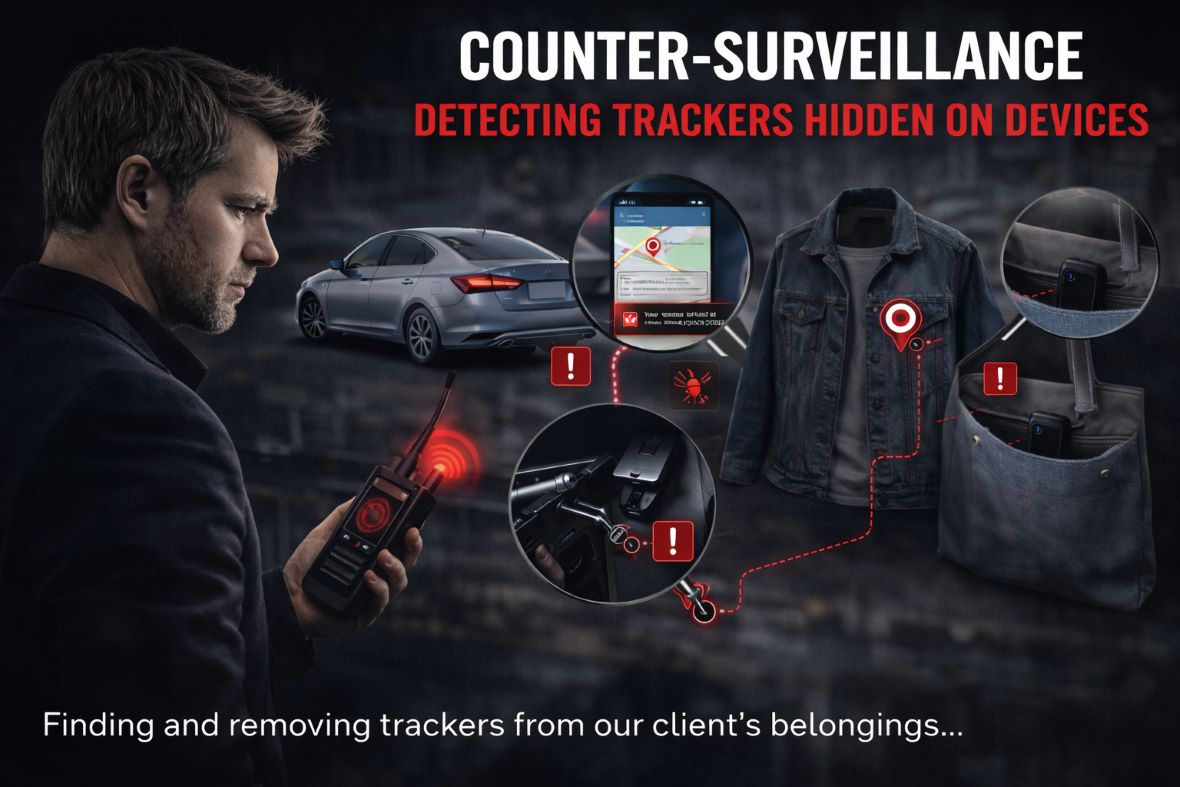
Smart cars, shared apps, and hidden trackers are easy to underestimate because they sit inside ordinary life. That is exactly what makes them effective in the wrong hands. They do not always announce themselves as surveillance. Often, they show up as a pattern of small things that slowly stop feeling accidental.
If those signs are starting to connect, the safest response is not denial and not drama. It is practical verification. The earlier a real concern is identified, the easier it is to protect your privacy, your safety, and your peace of mind.
FAQ
What is the clearest sign that I should take this seriously?
Usually, it is not one event on its own. It is a repeated pattern, such as unexplained location knowledge, private information leaks, unusual device behaviour, or tracker alerts.
Can smart cars really be used for monitoring after separation?
Yes. eSafety has specifically warned that connected cars can be misused through shared access, remote controls, and location-linked accounts.
Should I search everything myself straight away?
Usually, it is safer to document what you notice first. In higher-risk situations, especially where coercive control or stalking is involved, police or specialist support may be the better first step.
References
Australian Institute of Family Studies. (2023). Technology-facilitated coercive control. (Australian Institute of Family Studies)
Australian Institute of Family Studies. (2024). What the research evidence tells us about coercive control. (Australian Institute of Family Studies)
eSafety Commissioner. (2025). Collecting evidence safely. (eSafety Commissioner)
eSafety Commissioner. (2025). From smart cars to tracking devices: Technology’s increasing role in coercive control and family and domestic violence. (eSafety Commissioner)
eSafety Commissioner. (2025). How to manage your digital safety settings. (eSafety Commissioner)
eSafety Commissioner. (2025). Coercive control. (eSafety Commissioner)
New South Wales legislation. (n.d.). Surveillance Devices Act 2007 No 64. (NSW Legislation)
Powell, A., Flynn, A., & Hindes, S. (2022). Technology-facilitated abuse: National survey of Australian adults’ experiences. ANROWS. (ANROWS)


