
AI Romance Scams in Australia: A Guide to Protecting Yourself
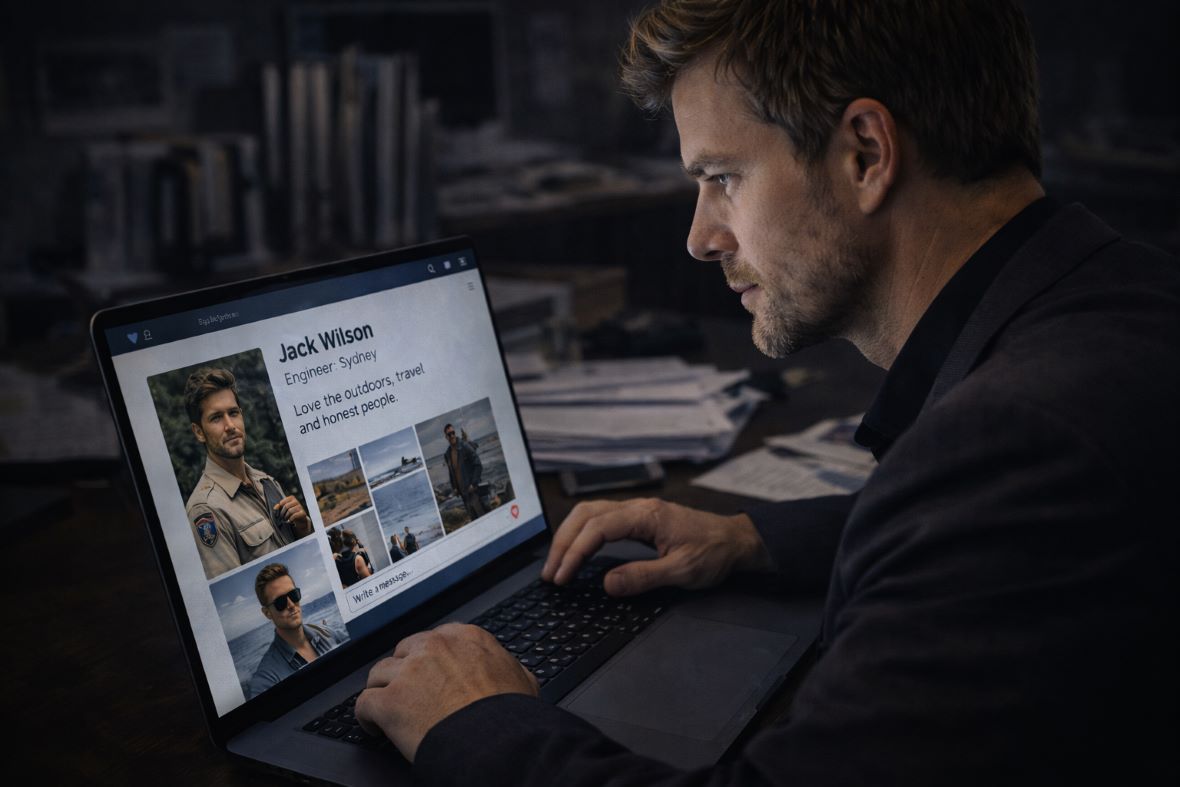
Romance scams have been around for a long time, but they’ve become harder to detect, especially with the rise of AI. In Australia, the National Anti-Scam Centre reports that these scams are causing significant financial losses, with over $28.6 million lost in just one year. While the tactics remain the same, scammers are creating increasingly convincing profiles, making it easier to fool victims.
If you’re chatting with someone online and things are speeding up, it’s crucial to ask yourself, “Do I really trust this person?” and “What can I verify before I commit to anything?” This could include checking their story, looking into their background, or even the legitimacy of plans to meet up. Private investigation services can be really helpful, as they can conduct background checks and trace online activity, giving you peace of mind and helping you protect yourself from potential fraud.
Why AI Scams Are So Convincing
Scammers are now using AI to craft fake videos, clone voices, and even create realistic-looking documents. They can produce fake passports and work permits and set up dating profiles that look authentic. In essence, these profiles can appear incredibly complete, making it even more challenging to identify a scam. An expert from UNSW points out that while the fraud itself remains familiar, AI enables scammers to craft more elaborate, emotionally manipulative schemes that can draw you deeper.
Private investigators can play a crucial role in combating AI scams by utilising their skills and resources to recognise and expose fraudulent activities. With the increasing sophistication of scams, private investigators are equipped to conduct thorough background checks, verify the authenticity of documents, and track down the origins of fake profiles.
They can analyse the digital footprint of suspected scammers, gathering evidence that an average individual might overlook. This includes tracing IP addresses, checking the validity of photographs, and confirming the legitimacy of voices using specialised tools. In a landscape where AI makes scams more convincing, the expertise of a private investigator becomes a valuable asset in safeguarding against these threats.
Steps to Take Before Sending Money
The most crucial rule remains simple: never send money to someone you’ve only met online. Scamwatch highlights that if an online acquaintance asks for money, personal bank details, or identification documents, it’s a glaring red flag. The Australian Federal Police adds that you should never transfer money or cryptocurrency to someone you just met, no matter how convincing their story sounds.
Here are some things to consider before money is even on the table:
- Does their story change when you ask simple questions?
- Are they avoiding a real-time video call?
- Do they push to take your conversation off the dating platform to a more secure chat too quickly?
- Is their “financial emergency” coming up suddenly?
- Are they requesting unconventional payment methods, such as cryptocurrency or gift cards?
These steps are crucial because romance scams usually unfold in stages. Scammers aim to build your trust first before they ask for money, often once they’ve gained your emotional commitment.
Protecting Yourself Before Sending Photos
Many people think sending photos isn’t as risky as sending money, but it can lead to serious issues like blackmail or identity theft. Scamwatch warns that scammers might request personal photos that could later be used against you. eSafety cautions that some individuals use intimate photos to blackmail victims, urging you to think twice before sending anything you wouldn’t want others to see.
Before you share any personal images, consider:
– Have you met the person in real life in a safe setting?
– Have you had a genuine, unfiltered video call that felt authentic?
– Do they respect your boundaries, or do they pressure you?
– Are they collecting content rapidly instead of building trust naturally?
– Would you be okay if that image were saved, copied, or shared?
It’s common for scammers to create a sense of intimacy or urgency in their requests. Once you send an image, you might lose control over it, which can lead to serious consequences. Keeping these tips in mind can help you steer clear of potential dangers and protect yourself in the online dating world.
What to verify before you share travel plans
Travel is another area where people lower their guard because it feels romantic or decisive. But eSafety warns that if you agree to meet someone in person, you should tell someone you know where you are meeting and take someone with you. It also says Scamwatch strongly recommends that people never travel overseas to meet a romantic interest in person for the first time, noting cases where people have been exploited as drug mules or placed in danger.
Before you share flights, hotel details, or a full itinerary, verify:
-
whether the person has given you enough real-world identity information to check
-
whether they are asking you to travel before properly meeting
-
whether they are steering you into secrecy
-
whether the location, timing, or urgency feels designed to isolate you
-
whether someone you trust has reviewed the situation and thinks it is safe
A useful rule is this: if you would not hand this person your wallet, passport, and weekend alone in a new city, do not hand over your travel plan either.
The practical checks that actually help
Scamwatch and the AFP both recommend practical verification steps that many people skip because they feel awkward or unromantic. But they work.
1) Reverse image search the profile photo
Scamwatch specifically recommends a reverse image search to see whether the same image appears online under different names or identities. eSafety gives similar advice.
2) Search the name plus the word “scam”
Scamwatch suggests searching the person’s name along with the word “scam” and checking for matching warnings, forum reports, or reused profile details.
3) Insist on a real-time video call
Not a recorded clip. Not an excuse. Not a blurry camera. A live interaction is not definitive proof, especially now that AI and deception tools are more advanced, but a consistent refusal is still a strong red flag. The AFP advises being wary if the person refuses to video chat or meet in person.
4) Slow the pace down
Scamwatch says to take things slowly, ask lots of questions, and watch for things that do not add up. Urgency is part of the scam. Slowing the process down is one of the easiest ways to break the manipulative rhythm.
5) Tell someone else early
Scamwatch advises against keeping an online relationship secret because someone else may notice what you are missing. That outside perspective is often one of the strongest protections against emotional manipulation.
Red flags that matter more in the AI-era scams
Some warning signs matter even more now because AI can make the surface look polished:
-
the profile looks unusually complete, attractive, and consistent
-
the person seems emotionally intense very quickly
-
they move the conversation off-platform early
-
they always have a reason they cannot meet properly
-
they produce “evidence” too easily, such as documents, work permits, or polished media
-
they start asking for help, privacy, or proof of commitment
-
they encourage money transfers, crypto, or travel before real-world verification
The National Anti-Scam Centre’s 2026 Romance Scam Fusion Cell report notes that scammers often use stolen or AI-generated images in fake profiles and that more than 70 dating platforms appeared in Scamwatch reports linked to romance scams in 2025. This is not a fringe issue. It is a mainstream scam environment.
If you already sent something
If you have already sent money, personal images, or sensitive information, do not panic, but do act quickly.
The AFP says to:
-
stop all communication
-
take screenshots of conversations and profiles
-
contact your bank immediately if money was transferred
-
report the matter to police via ReportCyber
-
report the scam to Scamwatch
-
contact IDCARE if identity compromise is a concern
If intimate images are involved, eSafety says image-based abuse and threats can be reported and that people should not keep paying or giving more content to a blackmailer.
Conclusion
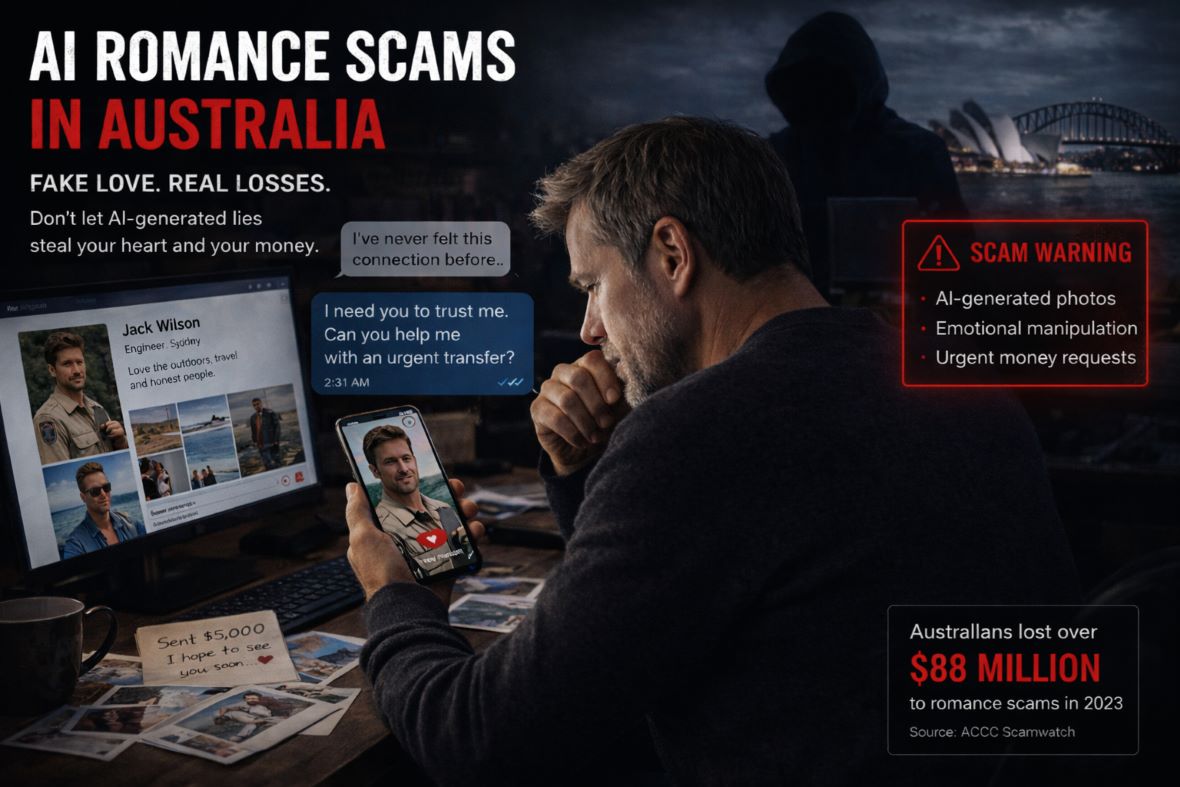
In a world where AI-generated profiles and emotional manipulations are increasingly common, the expertise of a private investigator can be invaluable. Engaging a Private Investigator in Sydney or your local PI not only enhances your safety but also helps you approach online relationships with the necessary caution and verification. Prioritising safety and verification, particularly in romance scenarios, is essential, and a private investigator can be an important ally in navigating these complex situations.
FAQ
How can I verify someone before sending money in an online relationship?
Start with basic identity checks. Reverse image search their photos, ask for a real-time video call, search their name with the word “scam,” and be extremely cautious if they ask for money, crypto, gift cards, or urgent transfers.
Should I ever send intimate photos to someone I have only met online?
It is safest not to. Australian guidance warns that scammers can use intimate photos for blackmail, threats, or image-based abuse.
Is travelling to meet an online romantic interest a good way to prove they are real?
Not as a first proof step. Travel plans can increase your risk. It is safer to verify identity, involve someone you trust, and avoid sharing full travel details until the person has been properly checked.
References
Australian Federal Police. (2025, January 31). More than 5000 Australian victims receive text warning over romance scam. https://www.afp.gov.au/news-centre/media-release/more-5000-australian-victims-receive-text-warning-over-romance-scam
Australian Competition and Consumer Commission. (2026, March 6). National Anti-Scam Centre taskforce report highlights value of joint effort to tackle romance scams. https://www.accc.gov.au/media-release/national-anti-scam-centre-taskforce-report-highlights-value-of-joint-effort-to-tackle-romance-scams
eSafety Commissioner. (2026, January 20). Online scams. https://www.esafety.gov.au/key-topics/staying-safe/online-scams
eSafety Commissioner. (2026, February 10). Someone is threatening to share my nudes. https://www.esafety.gov.au/young-people/someone-threatening-to-share-my-nudes
National Anti-Scam Centre. (2026, March 6). National Anti-Scam Centre Romance Scam Fusion Cell final report March 2026. https://www.nasc.gov.au/reports-and-publications/fusion-cells/national-anti-scam-centre-romance-scam-fusion-cell-final-report-march-2026
Scamwatch. (2026, February 10). Relationship scams. https://www.scamwatch.gov.au/types-of-scams/relationship-scams
Scamwatch. (2026, March 24). How scammers use technology and AI. https://www.scamwatch.gov.au/stop-check-protect/help-to-spot-and-avoid-scams/how-scammers-use-technology-and-ai
Shedden, O. (2024). Romance scams: Prevention and intervention actions in Australia. University of Newcastle. https://www.newcastle.edu.au/__data/assets/pdf_file/0012/957738/Olivia-Shedden-Romance-Scams-Research-Paper.pdf
University of New South Wales. (2026, February 9). Valentine’s Day is coming: How vulnerable are you to AI-enabled romance scams? https://www.unsw.edu.au/newsroom/news/2026/02/valentine-s-day-is-coming–how-vulnerable-are-you-to-ai-scams