

Trust is important in business, but trust without verification can become expensive very quickly. A new partner may sound credible, present well, and move fast, especially when a deal feels urgent or promising. The problem is that many of the warning signs only become obvious after money, access, or control has already changed hands.
That is where a due diligence check matters. It is not about assuming the worst. It is about confirming the basics before a business relationship becomes harder to unwind. In Australia, a proper due diligence check can verify whether a person or entity is who they say they are, whether the business details line up, and whether there are public red flags you should not ignore. It cannot guarantee future honesty, but it can reduce avoidable risk.
What a due diligence check is really for
A due diligence check is meant to answer a simple question:
Does this person, company, or opportunity hold up when the details are checked properly?
That usually means looking beyond sales talk and checking whether the public record, registration details, and background signals actually support the story being told. In practice, it is most useful before:
- signing a partnership agreement
- investing money
- handing over access to systems or clients
- sharing confidential business information
- entering a new joint venture or supplier relationship
The earlier you do it, the more useful it is.
What a due diligence check can actually verify
1) Whether the business or entity really exists
A basic but essential first step is verifying whether the entity is properly registered and whether the identifiers being used are real. In Australia, ABN Lookup allows searches by ABN, ACN, or name, which helps confirm whether the entity details match what you have been given. This is one of the fastest ways to catch basic inconsistencies early (ABR).
A proper check can help verify:
- the entity name
- the ABN or ACN
- whether the registration details match the name being used
- whether the business description and structure appear consistent
2) Who is officially connected to the company
If the opportunity involves a company, it is important to know who is actually behind it. ASIC explains that companies have officeholders such as directors and secretaries, and that these roles carry legal responsibilities. That matters because the person pitching the deal is not always the person formally responsible for the company (ASIC).
A due diligence check can help verify:
- current company officeholders
- whether the named director actually appears in the records
- whether the company structure matches what has been represented
- whether the people presenting themselves have an official connection to the business
3) Whether a director has been banned or disqualified
This is one of the most overlooked but most useful checks. ASIC maintains banned and disqualified registers, which can show whether a person has been banned or disqualified from corporate or financial roles. That does not prove every business issue on its own, but it is a major red flag if someone asking for trust or money has a serious regulatory history that was never disclosed (ASIC).
This kind of search can help verify:
- whether a person is banned or disqualified
- whether there is a regulatory history that should be considered before moving forward
4) Whether there are public insolvency concerns
AFSA states that the National Personal Insolvency Index (NPII) is a publicly available electronic record of certain personal insolvency proceedings in Australia. If the proposed partner is an individual, this can be relevant because insolvency history may affect credibility, financial risk, and the way obligations are managed (AFSA).
A due diligence check may help verify:
- whether a person has been subject to certain personal insolvency proceedings
- whether there are public insolvency signals that should change the risk assessment
5) Whether the business presentation feels genuine or engineered
The ACCC warns Australians to be cautious and check whether a business is genuine before sending money or entering into a risky arrangement. A polished website, strong social proof, or professional branding is not the same as real-world legitimacy. A proper due diligence process compares what is being claimed against what can actually be verified (ACCC).
That can include checking:
- whether the contact details are consistent
- whether the payment requests are unusual
- whether the business identity lines up across public sources
- whether the urgency feels artificial or manipulative
- whether the story changes when simple verification questions are asked
What a due diligence check cannot guarantee
This is the part many people need to hear clearly.
A due diligence check can verify a lot of useful information, but it cannot guarantee:
- that someone will act honestly in the future
- that a business deal will succeed
- that a person has disclosed every private problem
- that no risk exists beyond the public record
- that a polished proposal is commercially sound
In other words, due diligence helps you reduce blind spots. It does not remove judgment from the decision.
Common red flags that justify a check
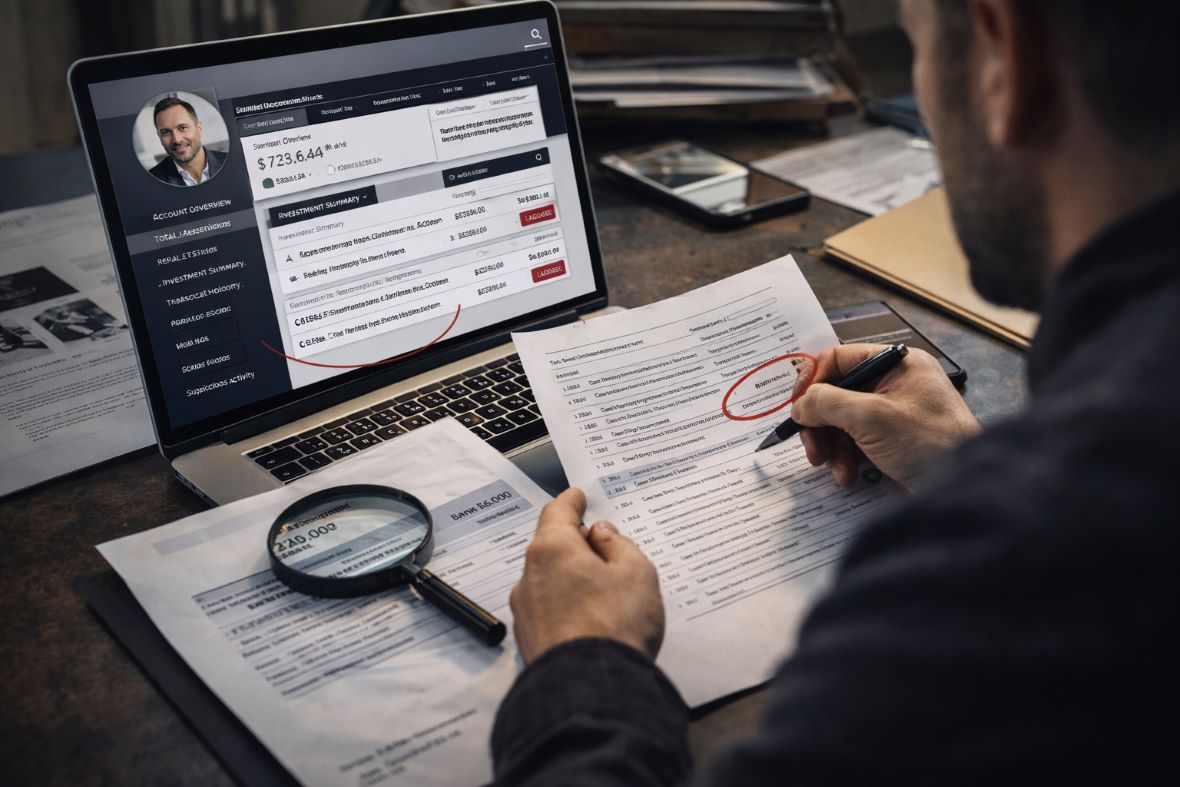
A due diligence check is usually worth doing when:
- the deal is moving unusually fast
- the person avoids simple verification questions
- the company structure sounds vague or keeps changing
- the lifestyle or pitch does not seem to match the stated background
- money or access is being requested early
- there is pressure to act before “someone else takes the opportunity”
- the person’s online presence looks too polished but too thin
The more trust, access, or money involved, the stronger the case for checking first.
Why timing matters
Due diligence is most valuable before the commitment, not after the damage. Once contracts are signed, money is transferred, or systems are shared, the cost of discovering a problem goes up. A verification check works best when it is still possible to slow down, ask harder questions, or walk away cleanly.
That is why “I just want to be sure first” is often the smartest point to investigate.
Conclusion
Before you trust a business partner, a due diligence check can do something very important: it can separate presentation from verification. It can confirm whether the business exists, whether the people involved are really connected to it, whether there are regulatory or insolvency red flags, and whether the overall picture feels genuine when compared against public records.
That may not answer every question. But in business, it often answers enough to stop a bad decision before it becomes a costly one.
FAQ
What is the first thing a due diligence check should verify?
Usually, it should verify that the business or entity actually exists and that the ABN, ACN, name, and other registration details match what you were told.
Can a due diligence check show whether a director has a bad regulatory history?
Yes. ASIC maintains banned and disqualified registers that can show whether a person has been banned or disqualified from certain corporate or financial roles.
Does due diligence guarantee the person will be trustworthy?
No. It helps verify important facts and identify public red flags, but it cannot guarantee future honesty or remove all commercial risk.
References
Australian Bureau of Statistics? No. Wait we need actual source; not include wrong. Let’s craft correctly:
Australian Business Register. (n.d.). Advanced search. https://abr.business.gov.au/Search/Advanced
Australian Competition and Consumer Commission. (n.d.). Checking a business is genuine. https://www.accc.gov.au/consumers/stay-protected/checking-a-business-is-genuine
Australian Financial Security Authority. (n.d.). National Personal Insolvency Index (NPII). https://www.afsa.gov.au/online-services-help/bankruptcy-register-search/national-personal-insolvency-index-npii
Australian Securities and Investments Commission. (n.d.). Banned and disqualified registers. https://www.asic.gov.au/online-services/search-asic-registers/banned-and-disqualified-registers/
Australian Securities and Investments Commission. (n.d.). Company officeholders (directors and secretaries). https://www.asic.gov.au/for-business-and-companies/companies/company-building-blocks/company-officeholders-directors-and-secretaries/


