
Private Investigator Sydney: How to Keep Your Belongings and Friends Safe, and Find Each Other During Festivities

Big nights out in Sydney are supposed to feel exciting, not stressful. But crowded festivities can create the same problems again and again: friends get separated, phones die, bags go missing, and simple travel plans collapse once roads close, or crowds build. By the time people realise they should have planned better, they are usually already trying to fix a problem in the middle of the noise.
A useful way to think about event safety is to adopt the mindset of a private investigator in Sydney: stay observant, keep your plan simple, and ensure your group can reconnect quickly if something changes. That does not mean treating a night out like an operation. It means making a few smart decisions early, so you do not spend the rest of the night reacting.
Start with one simple rule: do not rely on “we’ll work it out later”
Crowded Sydney events often become harder to manage once you are already in them. Transport for NSW routinely advises people heading to major events to plan ahead, check alerts, and use public transport because routes, station access, and surrounding roads can change as crowds build (Transport for NSW). NSW Police also recommends staying aware of your surroundings and moving toward populated, safe places if you feel uneasy (NSW Police Force).
That is why the best event-safety plan is usually the one you make before you arrive.
1) Pick your side of the event early
One of the easiest ways to lose people during festivities is to treat both sides of a route, precinct, or venue area as interchangeable. In reality, once crowds thicken, moving across can become slow, confusing, or temporarily impossible. That is especially true at major parades, marches, and CBD events where crossing points, police-managed access, and transport flow can all change as the night progresses.
A simple fix is to choose your side early and stick to it unless the whole group moves together. That one decision removes a lot of unnecessary wandering and last-minute miscommunication.
A good rule is:
- choose your main viewing or meeting side before leaving home
- tell everyone which landmark, side street, or station exit you are using
- do not assume you will be able to cross easily later
At major Sydney events, Transport for NSW often issues event-specific travel guidance because access points, closures, and crowd movement can change throughout the day and night (Transport for NSW).
2) Set two meet points, not one
One meeting point sounds organised until everyone tries to use it at once. The better approach is:
- One primary meeting point close to your main area
- One backup meeting point further out, in case the first becomes unusable
Good meeting points are:
- easy to describe
- visible and well-lit
- outside the thickest part of the crowd
- close to a clear landmark, station exit, or known corner
Avoid vague instructions like “meet near the food trucks” or “outside the bar.” In crowded conditions, those are usually too broad to be useful.
The practical investigator mindset here is simple: a regroup plan should still work if the network is slow, someone is stressed, or one person arrives later than expected.
3) Set check-in times before anyone gets distracted
People usually do not “lose” each other all at once. It happens gradually. Someone goes to the bathroom, another gets food, someone else follows the crowd, and then everyone assumes the others are nearby. A better approach is to agree on check-in times before the night starts.
That can be as simple as:
- message the group every hour
- check in at a set time after the parade, concert, or main act
- if someone misses two check-ins, the group moves to the backup meet point
This keeps the plan calm and predictable. It also means you do not have to decide what to do while already stressed.
4) Protect your phone first, because it is your map, ticket, and lifeline
At most Sydney festivities, your phone is doing several jobs at once. It holds your tickets, maps, messages, transport apps, banking access, and often your ride home. Losing it can turn a minor separation into a much bigger problem.
NSW Police and private investigators advises people to stay aware of their surroundings and keep their mobile phone charged as part of basic personal safety planning (NSW Police Force). A practical belongings plan looks like this:
- fully charge your phone before leaving
- bring a small power bank and cable
- use a lock screen and biometric security
- keep your phone in a zipped front pocket or secure crossbody bag
- turn on “Find My” features before the event, not after
If your phone is the single point of failure for the whole night, treat it like the most important item you are carrying.
5) Keep bags and valuables simple, light, and close
The more you carry, the more chances there are to misplace something in a crowd. A small, zipped bag worn close to the body is usually better than open totes, loose jacket pockets, or repeatedly setting your belongings down.
A simple event-safe setup is:
- one ID
- one payment card
- one backup payment method
- your phone
- charger or power bank
- minimal cash
- essential medication if needed
Avoid flashing valuables, carrying too many loose items, or handing things around the group casually. In crowded settings, “I thought you had it” becomes a very common problem.
6) Use location sharing carefully, and only with the right people
Location sharing can be genuinely helpful for regrouping, especially in a moving crowd. But it should be used deliberately, not automatically. The eSafety Commissioner explains that location sharing can be useful, but it also carries privacy risks, especially if you are not clear on who can see your location, for how long, and whether the sharing stays on after the event (eSafety Commissioner).
A safer approach is:
- only share with people you trust
- use time-limited sharing where possible
- check that sharing is switched off when the event ends
- do not post your live location publicly
- review app permissions if you are using multiple social or travel apps
This matters even more if the event is public, crowded, and highly visible online.
7) Build your transport plan around the end of the night, not just the start
Many people plan how to get in and leave “future them” to work out the trip home. That is usually when mistakes happen. Transport for NSW specifically advises eventgoers to use public transport, check travel alerts, and plan ahead because major events can affect trains, buses, light rail, roads, and station access (Transport for NSW).
Your best transport plan should answer:
- which station or stop are we aiming for at the end?
- are we all leaving together or in pairs?
- what is the backup if one station becomes too crowded?
- what is the latest realistic time to leave without rushing?
If your group wants flexibility, choose one homebound station plan and one backup. That decision is much easier to make before the event than after everyone is tired.
8) Know the difference between separation and a safety issue
Most event separations are temporary and solvable. But sometimes the issue shifts from inconvenience to safety. NSW Police advises that if you feel in danger, move to a place where there are plenty of people and seek help immediately (NSW Police Force).
A situation is no longer just a regrouping problem if:
- someone is intoxicated and alone
- a person is no longer responding after agreed check-ins
- there is a medical issue
- someone feels unsafe, followed, or threatened
- a phone, wallet, or transport access is gone and the person cannot get home safely
That is the point to go straight to event staff, police, transport staff, or venue security rather than trying to solve it informally.
9) Police and support staff may be visible, but your own plan still matters
At major Sydney events, there is often a visible police and support presence. For example, NSW Police’s Operation Mardi Gras 2026 involved high-visibility policing, specialist officers, and support for community safety across the event footprint (NSW Police Force). That kind of presence can help people feel safer, but it does not replace having your own regroup, transport, and belongings plan.
The strongest safety setup is still a personal one:
- know where you are
- know who you are with
- know how you will reconnect
- know how you are getting home
Conclusion
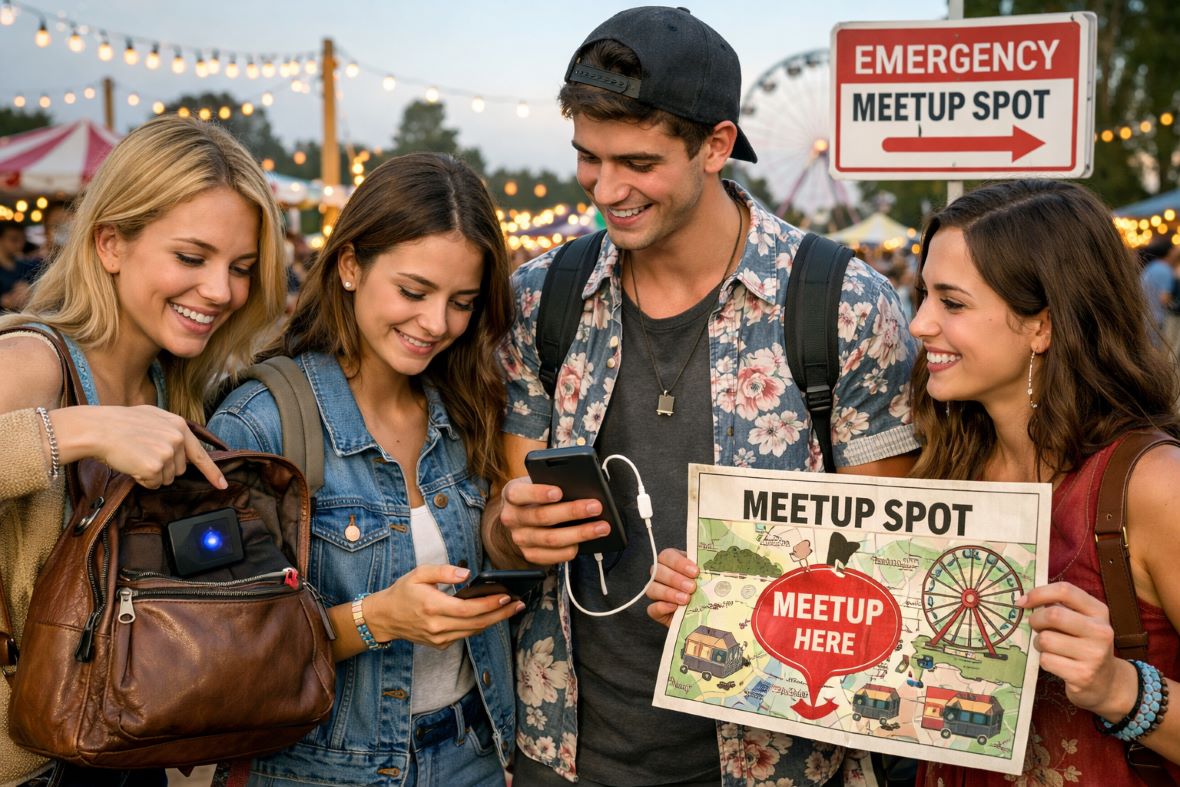
The best way to keep your belongings safe, your friends close, and your night on track is not complicated. It is early planning. Pick a side, choose two meet points, set check-in times, protect your phone, travel light, and know your trip home before the night gets noisy.
That is the real value of the private investigator Sydney mindset during festivities. Not suspicion. Not overthinking. Just calm, practical preparation that makes it easier to stay together, stay aware, and get home safely.
FAQ
How do we avoid losing each other on the night?
Pick a side of the route early, set two meet points, and agree on check-in times. Do not assume you will be able to cross easily once crowds build or event management changes access.
What is the best transport plan?
Use public transport where possible and plan your route before leaving home. Check event alerts, choose your target station early, and set a backup station or pickup option in case the first plan becomes too crowded or access changes.
Will there be police and support staff around?
Often, yes, especially at major Sydney events. NSW Police and other support personnel are commonly deployed at large public events, but it is still smart to have your own regroup and travel plan.
References
eSafety Commissioner. (2025, December 10). Location sharing. https://www.esafety.gov.au/key-topics/online-tools-and-features/location-sharing
NSW Police Force. (2026, February 27). Operation Mardi Gras 2026 launched ahead of celebrations. https://www.police.nsw.gov.au/news/news_article/
NSW Police Force. (n.d.). Personal safety. https://www.police.nsw.gov.au/safety_and_prevention/crime_prevention/personal_safety
Transport for NSW. (2026, April 25). Anzac Day Dawn Service & March – Sydney CBD. https://transportnsw.info/events/2026/04/anzac-day-dawn-service-march-sydney-cbd-0
Transport for NSW. (n.d.). Getting to events. https://transportnsw.info/events