
Have you ever considered that a single disgruntled employee or a faceless hacker could wipe out years of your hard work with a few clicks? Digital attacks aren’t just IT headaches; they’re existential threats that can drain bank accounts, leak trade secrets, and demolish a brand’s reputation overnight. While your tech team might be great at patching firewalls, they often lack the tactical skills to find out who actually pushed the button and why.
This is where the world of physical investigation meets the digital battlefield. Modern security requires more than just better software. It demands a strategy where private investigators step into the fray to handle Cyber Sabotage Investigations.
Cyber sabotage doesn’t always come from anonymous hackers overseas. In fact, one of the most uncomfortable realities is that insiders are frequently involved. Disgruntled employees, contractors with lingering access, or former staff members with unresolved grievances can quietly exploit their knowledge of internal systems.
This raises uncomfortable but necessary questions: “How common is cyber sabotage by employees?” and “Can a disgruntled employee sabotage company systems?” By applying traditional investigative rigour to digital crimes, these professionals provide the missing link between a malicious piece of code and the person responsible for it.
How Private Investigators Support Businesses During Cyber Attacks
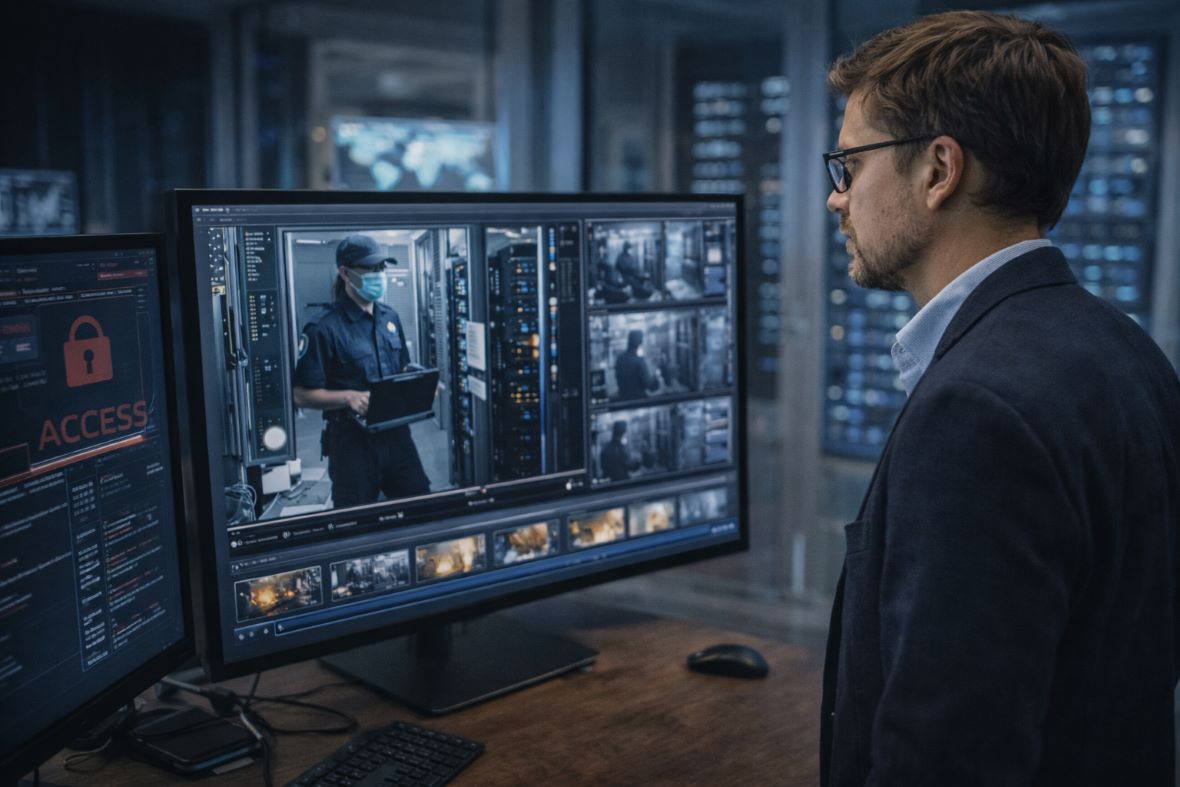
When a cyber attack hits, the immediate reaction is usually a frantic call to the IT department. While those technical experts are busy neutralising viruses or restoring backups, a vital support role is played by private investigators, offering reassurance that human expertise is available to complement technical efforts.
Private investigators work alongside your technical staff to look beyond the server logs. They treat a digital breach like a physical crime scene, looking for motives, patterns, and behavioural clues that a machine might miss. While the tech side focuses on the“how,” the investigator focuses on the “who” and the “why.” This collaboration ensures that once the system is back online, the threat doesn’t just circle back and strike again.
Not every system failure is sabotage, which is why many attacks go unnoticed for too long. Business owners often ask, “What is considered cyber sabotage?” or “Can cyber sabotage look like a technical error?” The answer is yes.
Cyber sabotage may appear as corrupted files, disabled backups, deleted logs, or systems failing at highly specific moments. Unlike random faults, sabotage often shows intent: selective damage, timed execution, or actions designed to delay detection.
By integrating these two worlds, you get a comprehensive defence. If you’re looking to take your security to the next level, hire a private investigator. The private investigator can use the technical data provided by IT to build a profile of the attacker. This might involve looking into recent company layoffs, analysing the specific timing of the attack, or checking if the methods used match the signature of a known bad actor. It’s a holistic approach that turns a reactive IT fix into a proactive legal and security response.
Connecting Digital Clues to Physical People
Digital evidence on its own doesn’t name a suspect. Investigators bridge that gap. Businesses often ask, “How do investigators link IP addresses to real people?” or “Can cyber attacks be traced to employees?”
Once a digital lead is identified, investigators correlate it with physical-world data. Login timestamps are compared with building access logs, swipe-card records, CCTV footage, and work schedules. For example, a sensitive file accessed at 2:30 AM using an employee’s credentials becomes far more meaningful when footage shows that person entering the office at that exact time.
This process answers another critical question: “How do investigators identify who used login credentials?” Credentials alone don’t prove intent. Context does.
Finding Evidence for Court Cases
A major concern after any cyber incident is whether the evidence will actually hold up. Businesses regularly ask, “Is digital evidence from cyber attacks admissible in court?” It can be, but only if it’s preserved correctly.
Private investigators are trained to document digital evidence without altering it. Unlike well-meaning internal teams, they avoid actions that overwrite metadata or contaminate logs. Every step is recorded, creating a clear chain of custody. This ensures that evidence linking sabotage to motive and opportunity remains legally valid. PI Collaboration with Police to ensure that their findings are recognised and utilised effectively in investigations.
This meticulous approach supports lawsuits, employment actions, and insurance claims. It also answers a crucial compliance question: “What mistakes make cyber evidence unusable legally?” In most cases, those mistakes happen when investigations aren’t handled professionally from the start.
Identifying Internal Threats and Former Employees

One of the most brutal truths for business owners to swallow is that the threat often comes from within. Many private investigator services reveal that the culprit is a current or former employee with a grudge. Internal staff already have the keys to the kingdom; they know where the sensitive data lives and which systems are the most vulnerable. Using an outside investigator for these cases is vital because they offer the objectivity your internal HR or IT teams simply can’t match.
Internal teams often have personal relationships with suspects, which can lead to bias or hesitation. A private investigator offers objective insights, helping your team feel more confident that the investigation is fair and thorough.
Spotting Red Flags Before Damage Occurs
You don’t always have to wait for a disaster to happen. Recognising early warning signs empowers you to act swiftly, protecting you from potential damage and fostering confidence in your proactive security approach.
- Data Hoarding: An employee suddenly downloads large volumes of sensitive files that don’t relate to their daily tasks.
- Irregular Access: Logging into the company network at 3:00 AM or from unusual geographic locations.
- Behavioural Shifts: Visible resentment toward management, missed deadlines, or a sudden, unexplained interest in administrative permissions.
- Policy Circumvention: Attempting to turn off security software or using unauthorised USB drives.
By keeping a close eye on these patterns, you can hire a private investigator Sydney to take proactive steps in corporate investigations across Australia before any significant damage occurs. It’s always better to catch a potential threat early than deal with the aftermath later.
Digital Threats, Human Expertise

The face of crime has changed, but the fundamental need for human intelligence has not. While firewalls and encryption are necessary, they are only half the battle. Cyber Sabotage Investigations remind us that behind every digital attack is a person with a motive. By bringing in private investigators, you’re adding a layer of expertise that can navigate both the digital and physical worlds to uncover the truth.
Modern business security requires a blend of digital tools and human smarts to stay protected. If you suspect your business is being targeted from within or by an outside actor, you can’t afford to wait. Immediate response transforms risks into recoverable situations. Trusting a professional to dig into the details gives you the peace of mind that your assets are truly secure. Don’t let your digital identity be a target; take the lead and reinforce your defences today.
FAQ: About Cyber Sabotage Investigations
What is the difference between an IT audit and a private investigation?
An IT audit is a technical review of your systems to find vulnerabilities and ensure compliance. It’s about the health of the machine. A private investigation focuses on human behaviour, identifying suspects, and gathering evidence for legal action. One finds the hole in the fence; the other finds the person who cut it.
Can a private investigator help if the attack came from overseas?
Yes. While physical arrests are harder across borders, investigators can still trace the origin of an attack and identify the entities involved. This information is crucial for insurance claims, notifying international authorities, and implementing specific blocks to prevent future incursions from that region.
Is the evidence found by a PI legal to use in a lawsuit?
Strictly speaking, yes, provided the investigator is licensed and follows legal protocols. Unlike a private citizen, a professional investigator knows how to gather information without violating privacy laws, ensuring that the evidence remains untainted and ready for use in a court of law. By keeping a close eye on these patterns, you can hire a private investigator in Sydney to take proactive steps in corporate investigations across Australia before any significant damage occurs. It’s always better to catch a potential threat early than deal with the aftermath later.