
When you suspect a partner is cheating, your mind starts filling in blanks you never agreed to see. A late meeting becomes a secret date, a muted phone becomes a second life, and your home can start to feel like a waiting room. You don’t just want answers, you want certainty.
That’s where infidelity surveillance can help, but how you go about it matters. If you try to follow your partner yourself, you risk being spotted, escalating conflict, or crossing legal lines without meaning to. A Private Investigator gives you clarity without putting you in the middle of the storm. They stay neutral, which is harder than it sounds when you’re hurting, and that neutrality is often what separates a messy suspicion from a clean set of facts.
Why You Should Hire a Private Investigator for Infidelity Surveillance
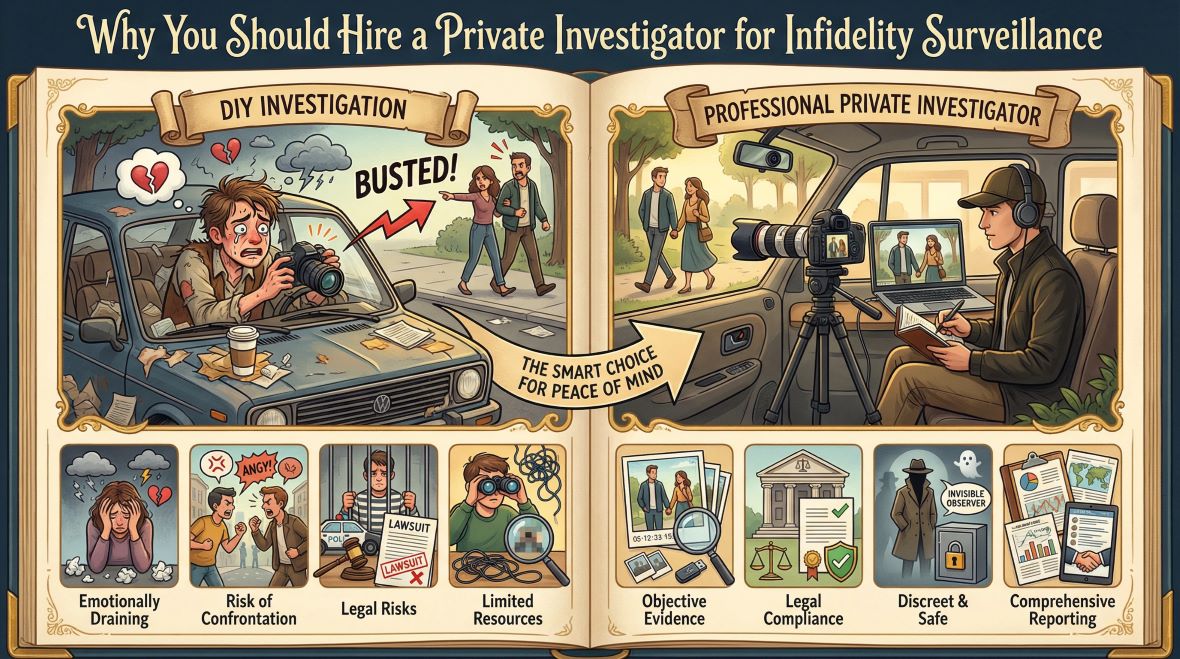
Infidelity surveillance is not about drama; it’s about proof. If you’re already carrying doubt every day, guessing won’t protect you. Clear evidence does. A Private Investigator is trained to observe, document, and report what happens, without turning your personal life into a confrontation or a risky DIY operation.
When you handle surveillance yourself, emotion tends to run the show. You might follow too close, react in the moment, or confront before you have the whole picture. You can also miss key details because you’re watching through the lens of fear or anger. A professional approach lowers that risk because the goal is simple: collect accurate information and keep it reliable.
There’s also a legal side that many people don’t think about until it’s too late. Specific actions, like trespassing, harassment, or unlawful tracking, can cause serious problems. Even if your intentions feel justified, the outcome can still harm you, especially if your situation later involves lawyers or the family court. A Private Investigator is there to work within legal boundaries and protect you from decisions made in the heat of the moment.
If you’re considering professional support, start with professional surveillance services so you understand what a discreet, lawful investigation can look like in real life.
Professional Skills and Proper Equipment
A Private Investigator Sydney doesn’t just “follow someone.” They plan surveillance to stay unseen while still capturing practical details.
Depending on the case, this can include high-definition cameras for explicit imagery and time-stamped photos, as well as GPS tracking when lawful and appropriate. They also know how to work around common pitfalls, such as getting noticed in traffic, standing out in a parking lot, or being remembered by venue staff.
If you try to do this yourself, you’re the one variable your partner knows best. Your car, your posture, your habits, even the way you hold your phone, can give you away. A trained investigator avoids that problem because they’re practised at blending in and keeping a consistent distance without raising alarms.
Legal Adherence and Gathering Admissible Evidence
Good evidence is more than a photo. It’s how it was obtained, how it was handled, and how well it can withstand scrutiny.
Professional investigators focus on lawful conduct, so they avoid activities such as illegal entry, invasive recording, or repeated contact that could be considered harassment. They also tend to document events in a structured way, with clear notes, dates, and context, which makes the final material easier for a lawyer to assess.
In formal investigations, best practice is to collect information with admissibility and disclosure obligations in mind. While your case may be personal, the same logic applies: evidence is more substantial when it’s gathered carefully, recorded consistently, and preserved in a way that protects integrity. In other words, you’re not just paying for observation, you’re paying for a process that reduces doubt and reduces risk.
The Process of Working with a Private Investigator
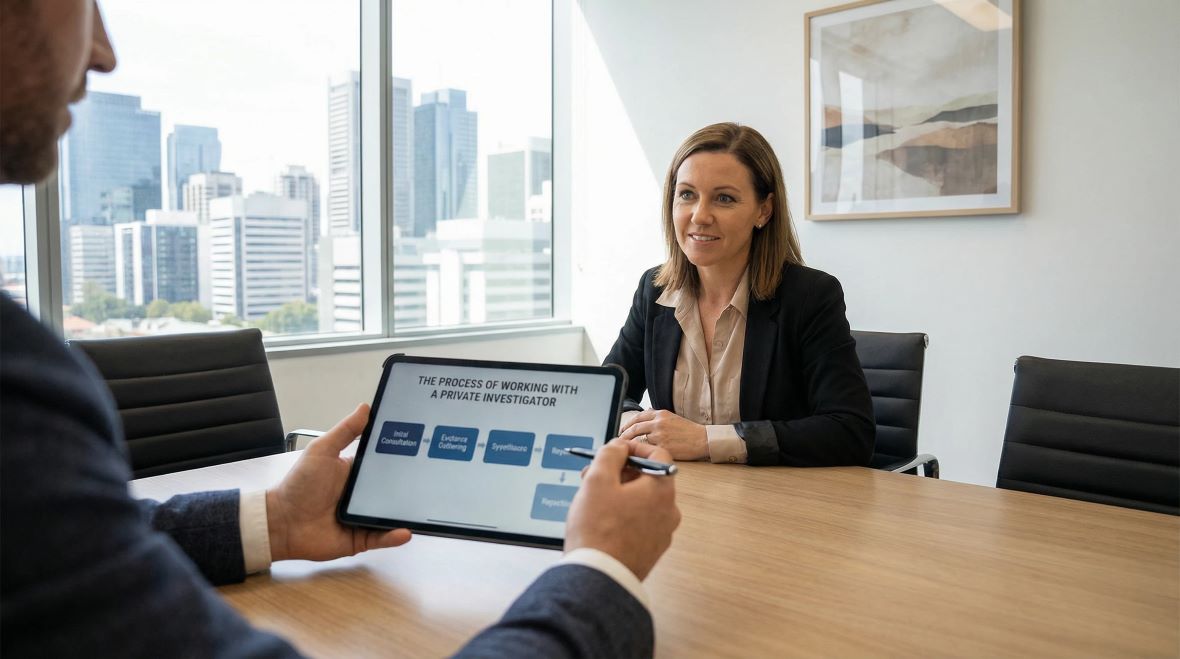
Hiring a Private Investigator for infidelity surveillance usually follows a steady path, from first contact to final report. The steps are designed to protect accuracy, limit bias, and maintain discretion.
You also avoid a common trap that leads to many investigative failures: poor fact-checking. When people are emotional, they can cling to one detail and build a whole story around it. Another risk is data integrity issues, such as relying on outdated information, mixing up dates, or assuming a pattern that isn’t real. A professional helps you slow that down by verifying details and recording events in a way that can be reviewed later.
In structured investigative settings, information management matters because records can be audited, questioned, or compared against other material. The same idea helps you here: when you have a clean timeline and consistent documentation, you’re less likely to second-guess yourself later.
If you want a clearer idea of what you may receive at the end, review the types of evidence provided so you know what a proper surveillance outcome can include.
Initial Consultation and Strategy Planning
Your first conversation is where you set goals. You’ll share what you’ve noticed, what you’re worried about, and what outcomes you need. Sometimes you want confirmation before you confront, sometimes you want peace of mind, sometimes you need documentation for legal advice.
From there, the investigator plans the surveillance around patterns, not hunches. That usually means identifying the best days, times, and locations based on your partner’s routine, such as work schedules, gym visits, “late meetings,” or recurring errands that don’t add up.
Planning also includes practical guardrails: how to avoid detection, what not to do, and how to keep the work focused. A professional approach reduces wasted hours and holds attention on what can actually be verified.
Receiving Results and Maintaining Professionalism
When surveillance is complete, you’ll receive a report that lays out what was observed and when. It might include photos, video, and written notes that explain the sequence of events in plain language.
This is where a Private Investigator’s professionalism becomes more than an admirable trait. When you’re emotional, it’s easy to interpret everything as proof or to ignore inconvenient facts. An investigator’s job is to stay objective, record what happened, and avoid shaping the story to match anyone’s expectations.
In well-run investigations, quality control often means review points and clear documentation so decisions can be explained later. While your situation is personal, you still benefit from that same discipline: a clear record, kept consistently, makes it easier to decide what to do next without spiralling into “what if.”
What you need to consider
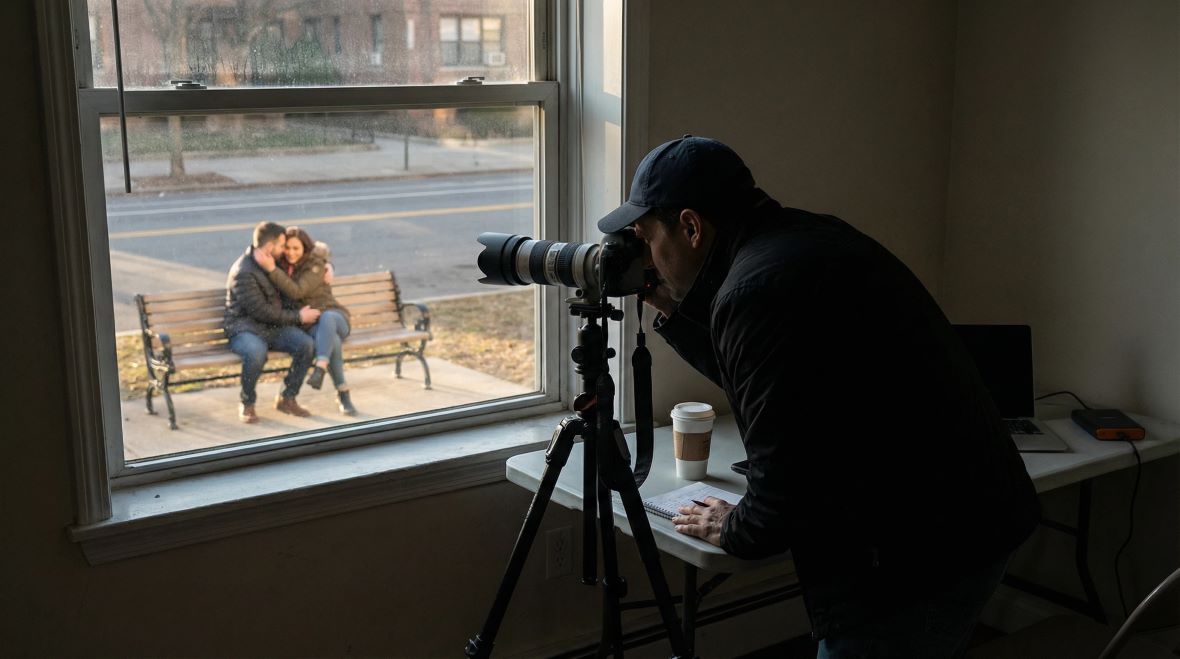
Infidelity surveillance is painful to consider, but living in constant doubt can be worse. When you hire a Private Investigator, you’re choosing facts over fear, and structure over chaos. You also protect yourself from risky DIY choices that can backfire legally or emotionally.
Once you have the truth in your hands, you can move forward with your life, whether that means repairing your relationship, setting boundaries, or walking away. The point isn’t to “catch” someone, it’s to reclaim your ability to make decisions based on reality, not suspicion. If you’re tired of guessing, getting clear evidence can be the first step back to feeling steady again.